Showing posts with label Yuma Takahashi. Show all posts

Sunday, December 22, 2013

Merry Christmas and Happy New Year from the EXEB-lab in Lund!


Posted by Erik Svensson

On behalf of the EXEB-lab in Lund, I wish all co-workers, including all of our students, postdocs, junior researchers, national and international collaborators a Merry Christmas and a Happy New Year 2014! The year has been succesful, with new grants, excellent publications and two new PhD-students accepted in to the group: John Waller, Katrine Lund-Hansen and Anna Nordén. They have both made a strong start in their research careers and we wish them all good luck for the future.

In 2013, there has also been some notable achievements by former postdocs Yuma Takahashi and Lesley Lancaster, who have both obtained research positions in the UK and Japan, respectively. We wish both Yuma and Natsu good luck as they now will hopefully establish themselves as independent researchers at their new universities.

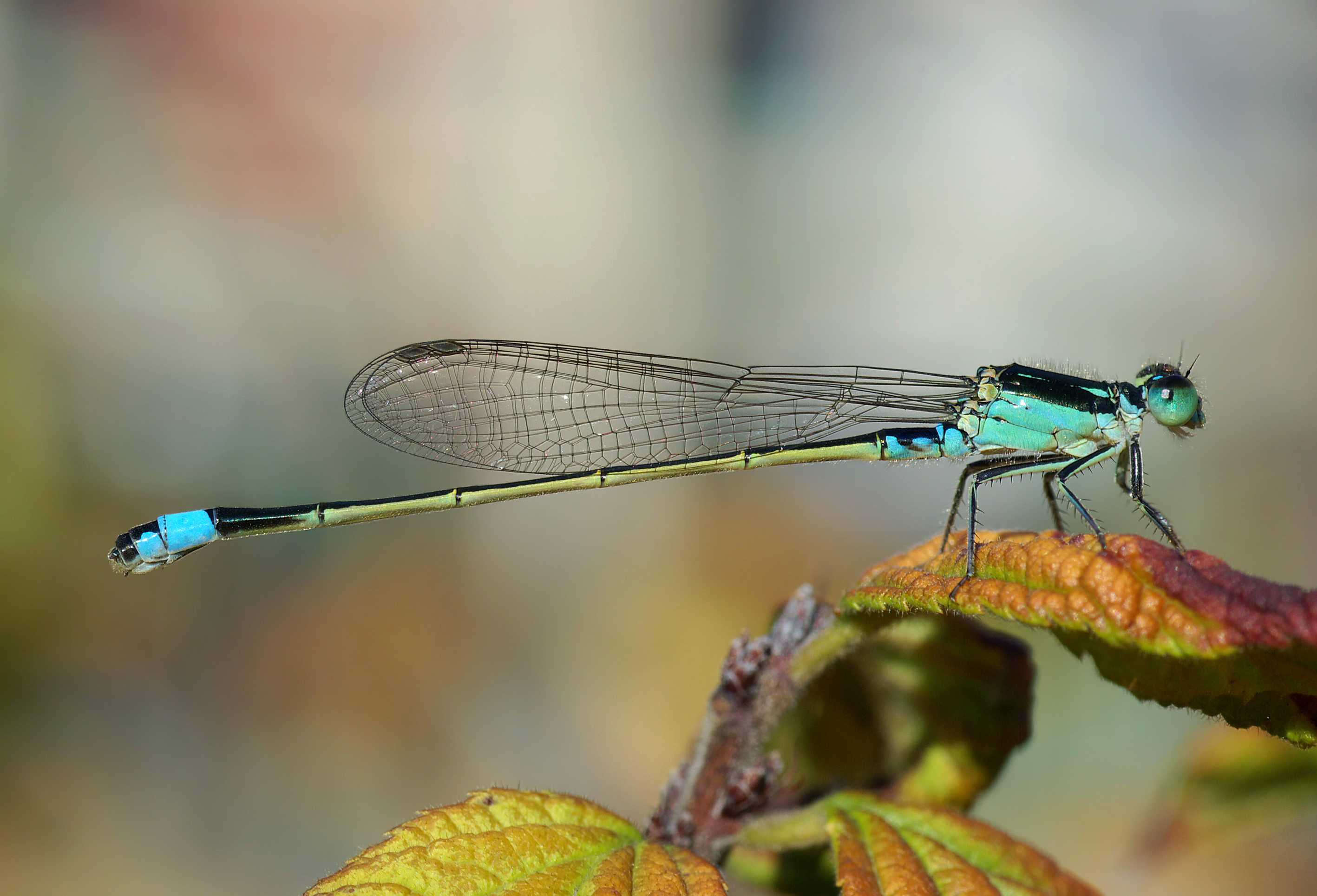
As for myself, I am very happy with they past year, and on the personal level, what gave me most satisfaction was probably winning the photo competition of the journal "Oikos" (see picture below). My pictures of ovipositing emerald damselflies (Lestes sponsa) will now be on the cover of Oikos in 2014, and apparently also be on the new "app" the journal will soon launch.

I used the prize sum (100 GBP) to buy some books at Amazon, including the autobiography of Richard Dawkins: An appetite for wonder: The making of a scientist. Although I am not as huge and uncritical fan of Richard Dawkins as I used to be, I am looking forward to read this one, as I imagine it will be very interesting and thought-provocative.


Friday, February 22, 2013

New lab- and bloglogo made by Yuma Takahashi

Posted by Erik Svensson


You might notice that I have changed the lab-logo to a more fresh looking one, created by our postdoc Yuma Takahashi, who will unfortunately leave the lab next week to return to Japan, alongside with Natsu. We are of course grateful to both Yuma and Natsu for their contributions to the lab and we wish them good luck with their future research and careers.

Feel free to use this new logo yourself, in "Acknowledgements" after talks, for instance or when advertising things connected to EXEB.

Yuma was also kind enough to send me my name as written in Japanese, and I cannot resist the temptation to also post it below.


Wednesday, January 2, 2013

Happy New 2013!

Posted by Erik Svensson

The year 2012 is now behind us, and we are looking forward to 2013. The past year was, I dare to say, extremely successful in terms of grant applications, good publications, events and activities. To mention just a few things: three new postdocs joined the lab (Yuma, Lesley, Natsu), one PhD-student defended her thesis in May (Anna Runemark), one postdoc got a "Junior Project Grant" from the Swedish Research Council (Maren) and Jessica got a large grant from the Crafoord Foundation, that has made it possible for her to recruit a new PhD-student to work on the flatworm experimental evolution project. I myself, got a large grant from The Swedish Research Council too, which I am of course very happy for. I certainly hope that 2013 will be as successful, for all of us, as was 2012. Well done, all of you!

Among publications, I could mention some nice papers in Ecology, Molecular Ecology and Trends in Ecology & Evolution, but there are certainly more. I was also happy to get my new volume "The Adaptive Landscape in Evolutionary Biology" out at Oxford University Press (co-edited with Ryan Calsbeek from Dartmouth College, USA). 

Below are some pictures from the past year. Keep up the good work, friends!


In December, postdoc Lesley Lancaster visited Erik in Dalby to run some generalized linear models in "R" to investigate the role of temperature on mating conflicts in the polymorphic damselfly Ischnura elegans. 


Earlier in December, lab members from EXEB and other colleagues at the Evolutionary Ecology Unit went for our annual Christmas Meeting. Here John, Jasmine and Anna Nordén enjoy the Christmas Table in the evening after the talks. 


And here are Jessica and Yuma in the same evening.


In January and February, Erik went to South Africa for field work with odonates in the Western Cape Province with Master's student Anna Nordén (right) and undergraduate Johanna Eklund (left). Here they both enjoy some of the wine of the Stellenbosch district. 


The arrival of our two Japanese postdocs Yuma and Natsu in May enabled us to start up some new projects, including one on Wing Interference Patterns (WIP:s) in Drosophila melanogaster and their role in mate choice and sexual selection. Here we see Yuma, Natsu, Jessica and Jostein Kjarandsen in the lab, doing mate choice trials (Erik is behind the camera). 

Friday, November 2, 2012

Lab-meeting about developmental biology and our ongoing Drosophila-research


This coming Tuesday (November 6 2012), we will listen to an informal research presentation by our Japanese postdoc Natsu, who will tell us about her research progress on the genetics and function of Wing Interference Patterns (WIP:s) in Drosophila melanogaster. This is a collaborative project, involving Natsu, Jessica, Jostein Kjaerandsen and myself. Above, you see three of us and Yuma working in the laboratory, trying to get matings between males from inbred lines that differ in their WIP:s and wild-type females. Below that, you see some of the test vials where mate choice is taking place, in this case against black background, which is though to increase perception of the signal (WIP:s).

Time and place for lab-meeting as usual: "Argumentet" at 10.30 (Wednesday, November 6). Natsu will also tell us a little about her PhD-work on plant developmental biology, that took place in Japan, before she came to Lund for her postdoc to work on Drosophila. It should be very interesting, I hope. I also hope that Natsu can bring some unusual "fika", hopefully with Japanese touch :).

Most welcome!

Friday, September 7, 2012

Talk on frequency-dependent selection by Yuma Takahashi


Posted by Erik Svensson

Next week's lab-meeting will take place in "Argumentet" (2nd floor, Ecology Building) on Tuesday September 11  at 10.30, i. e. usual time. This time, it will be our postdoc Yuma Takahashi from Japan who will give a short and informal talk about his past and ongoing research on colour polymorphisms and frequency-dependent selection in Ischnura-damselflies. As some of you already know, Yuma did his PhD-research on the damselfly species Ischnura senegalensis, a tropical counterpart to Ischnura elegans, who we have been working on in Sweden and Europe. You can read more about Yuma's research here, and find his publications here.

Do not miss this opportunity to listen to Yuma and his interesting research. I will bring some "fika".

Sunday, July 1, 2012

Annual barbecue in Dalby


Posted by Erik Svensson


Our annual and by now very tradition-laden lab-barbecue took place in Dalby on June 30 2012, for the 13th season in a row, since it started in 2000.

This year, the following nationalities were represented: Canada, Denmark, France, Japan, Netherlands, Scottland, South Africa, Sweden and USA. It was also the first time that we saw rice on the barbecue (brought by Yuma Takahashi).

Yuma also showed his talent in the traditional Swedish game "Kubb" afterwards. Thanks to everyone who came and contributed to the wonderful evening, when Sweden showed its best side (in terms of weather at least). And very welcome next year in June again!


Thursday, August 18, 2011

ESEB-meeting in Tuebingen (Germany) 20-25 August 2011


The European Evolutionary Biology meeting ("ESEB") is quickly approaching, and several current and past members of our laboratory will participate, either with posters or with talks. The scientific programme looks really exciting and can be found here.  I will try to publish one or several blog posts with my impressions from the conference, and I would encourage all of you who read this and have permission to publish on the blog to also do so, to share our experiences and impressions with others.

I will give a talk myself as invited speaker in the session "Speciation by natural versus sexual selection" on Wednesday August 24. PhD-student Anna Runemark from our lab was also offered the opportunity to give a talk about her work on inbreeding and purging of the genetic load in island populations of lizards, and it will take place the same day as mine.

Also, our incoming postdoc from Japan, Dr. Yuma Takahashi, will give a talk about frequency-dependent evolutionary dynamics of genetic polymorphisms in Ischnura senegalensis on Sunday August 21 at 11.00 in the "Life-history"-session. Do not miss it! Apart from these three talks, there will also be poster contributions from former lab-member Jessica Abbott and current postdocs Kristina Karlsson Green, Machteld Verzijden, Maren Wellenreuther and Sophia Engel, as well as several other contributions from the Department of Biology in Lund, of course.

I am very much looking forward to this meeting, and I hope to be able to talk to most of you, perhaps even gather the whole crowd of current, former and incoming lab-members and go for a dinner together. Perhaps Tuesday evening (August 23)? Let's try to get in touch during the meeting, even though it will be difficult in the large crowd of evolutionary biologists.

Sunday, March 13, 2011

Incoming postdoc Yuma Takahashi from Japan is alive, on Hokaido and is doing well


Given the terrible events in Japan, with the earth quake, Tsunami and threat of nuclear power meltdown, it is of course a relief to hear that incoming postdoc Yuma Takahashi who will join us next year (2012), is alive and he is doing well. Yuma was on a meeting in the north on the island of Hokaido on The Conference of the Ecological Society of Japan when the disaster happened.

Yuma did send me an e-mail with the movie above and assured me that he is doing well. This is a relief, of course, although it is very said with all the human lives that have been lost. Let's keep our fingers crossed that the worst is over and that Yuma can safely come to Lund next year!

Saturday, January 22, 2011

Dr. Yuma Takahashi receives postdoctoral scholarship from Japan to join our lab


I am pleased to announce that Dr. Yuma Takahashi from Japan has been awarded a three-year postdoctoral scholarship, and will join our laboratory in 2012. Yuma received his doctorate degree at University of Tsukuba and in his thesis work he studied female colour polymorphism, frequency-dependent selection and evolutionary dynamics of the damselfly Ischnura senegalensis. You can read more about Yuma's research here. His study organism (I. senegalenis) is a small coenagrionid damselfly is closely related to Ischnura elegans, which we have studied in our lab.

There are many interesting similarities, but also difference between these two polymorphic species. One major difference, though, is that Ischnura senegalensis has only two female morphs, not three as in Ischnura elegans. Another interesting ecological difference is that the male mimicking androchrome females are often in minority in I. senegalensis, or at least not much more than 50 % of the female population, whereas this female morph is often the most common morph in I. elegans (at least in Sweden where we have mainly studied it). These interesting ecological species differences will hopefully be understood better and be explored after Yuma joins our lab in 2012.

Yuma has already published eight papers from his thesis-work and here I would just like to point to his latest one, which recently appeared in the journal Evolution. Using a powerful combination of field observations and experiments and simulation modelling, they elegantly illustrated the evolutionary dynamics of this polymorphic system which strongly suggest that this dynamic is most likely the result of frequency-dependent sexual conflict interactions, caused by male-female antagonistic mating interactions. In short: males develop a "search image" for common female morphs, and common morphs become differentially sexually harassed, resulting in an inverse relationship between a morph's fitness and its frequency in the population, which leads to negative frequency-dependent selection (NFDS), a very powerful evolutionary mechanism to maintain genetic polymorphisms. 

These findings and conclusions by Yuma and his co-workers are very similar to our paper on I. elegans that we published in 2005 in American Naturalist. It is of course nice to see that the genus Ischnura continues to generate interesting studies and inspire evolutionary biologists in different countries, including Japan. As an aside, the next international dragonfly conferences (WDA) will also take place in Japan, south of Tokyo between July 31 and August 5 2011. I am very happy and flattered to become invited as a plenary speaker to this rather small meeting of odonate enthusiasts, amateurs, naturalists and researchers.

Below is the Abstract and link to Yuma's article in Evolution, for those who are interested in reading more about this fascinating species and study system:


Takahashi, Yuma, Yoshimura, Jin), Morita, Satoru) & Watanabe, Mamoru


Abstract: Negative frequency-dependent selection (NFDS) is one of the most powerful selective forces maintaining genetic polymorphisms in nature. Recently many prospective cases of polymorphisms by NFDS have been reported. Some of them are very complicated, although strongly supportive of the NFDS. Here we investigate NFDS in wild populations of the dimorphic damselfly Ischnura senegalensis, in which females occur as andromorphs and gynomorphs. Specifically, we (1) test fitness responses to morph frequencies, (2) built a simple population genetic model, and (3) compare the observed and predicted morph-frequency dynamics. Fitnesses of the two morphs are an inverse function of its own frequency in a population, and are about equal when their frequencies are similar. Thus the conditions necessary for NFDS are satisfied. The long-term field surveys show that the morph frequencies oscillate with a period of two generations. Morph frequencies in a small population undergo large oscillations whereas those in a large population do small oscillations. The demographic properties of the observed dynamics agree well with those of our model. This example is one of the simplest confirmed cases of NFDS maintaining genetic polymorphisms in nature.