
Showing posts with label Inralocus sexual conflict. Show all posts
Showing posts with label Inralocus sexual conflict. Show all posts
Monday, June 27, 2011
Sexual conflict terminology covered by the "Nature"-blog
Some of you have probably heard about the paper that former PhD-student Tina and current PhD-student Josefin recently published in Animal Behaviour, where they analyzed the biased terminology in the sexual conflict litterature, and found some striking patterns. This study has now been discovered by the Nature News Blog in a recent blog post. Our warmest congratulations to Tina and Josefin to their study, which has already gained some impact in the scientific community. Hopefully, their provocative article will help to improve the research practice and clean up sloppy terminology in this field in the future.


Sunday, February 20, 2011
On intra- and interlocus sexual conflict in birds and plants
This week's lab-meeting (Wednesday February 23, 13.30-15.00), will be dedicated to sexual conflict, both intralocus and interlocus sexual conflict. PhD-students Maja Tarka and Josefin Madjidian want to have some input on their manuscripts, which deals with these topics in warblers and plants, respectively. Please contact Maja (maja.tarka@zooekol.lu.se) and Josefin (Josefin.Madjidian@ekol.lu.se) to get copies of their manuscripts, well before Wednesday, so that you have time to read and give input.
Any fika volunteer?
Any fika volunteer?
Saturday, January 22, 2011
Dr. Yuma Takahashi receives postdoctoral scholarship from Japan to join our lab

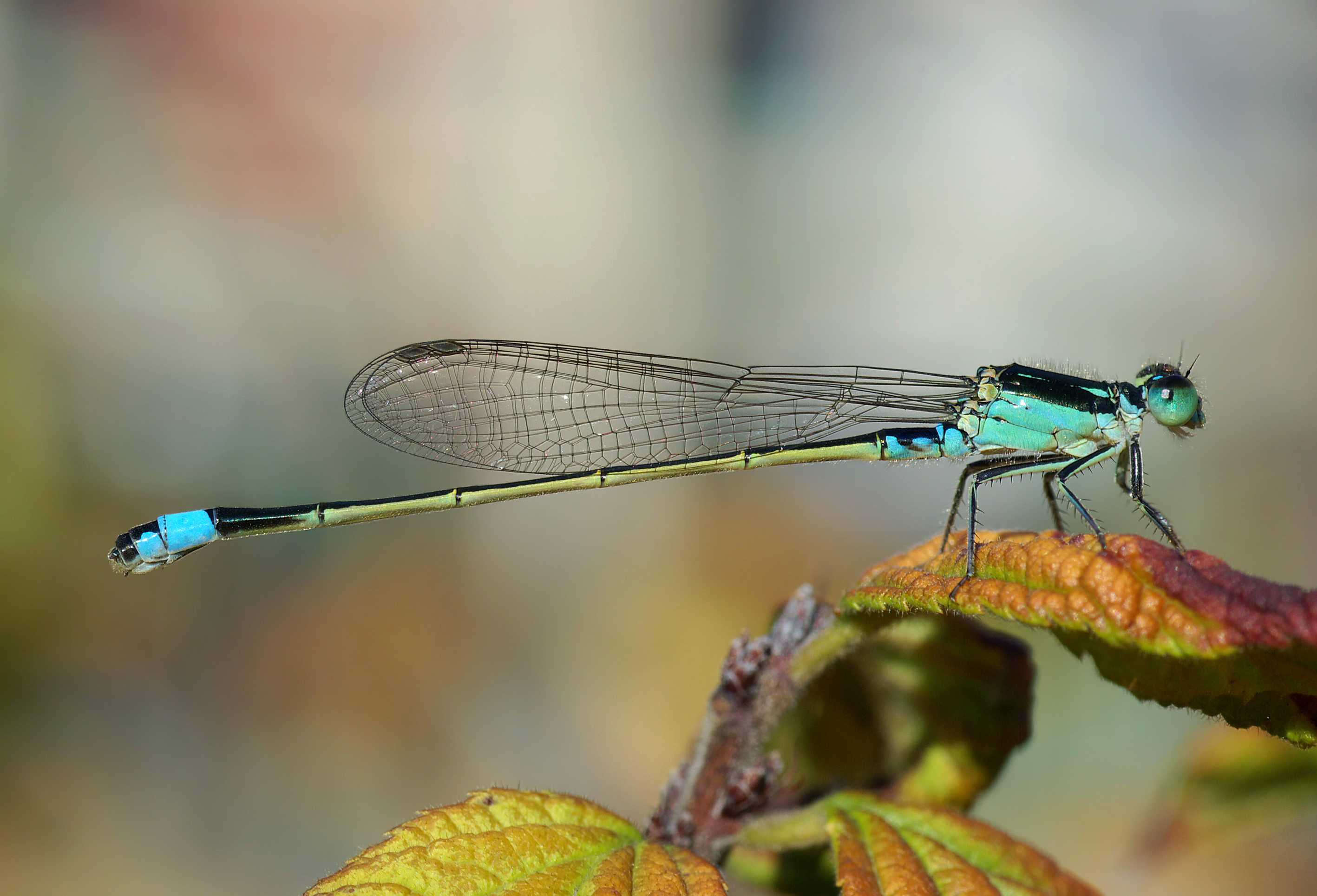
I am pleased to announce that Dr. Yuma Takahashi from Japan has been awarded a three-year postdoctoral scholarship, and will join our laboratory in 2012. Yuma received his doctorate degree at University of Tsukuba and in his thesis work he studied female colour polymorphism, frequency-dependent selection and evolutionary dynamics of the damselfly Ischnura senegalensis. You can read more about Yuma's research here. His study organism (I. senegalenis) is a small coenagrionid damselfly is closely related to Ischnura elegans, which we have studied in our lab.
There are many interesting similarities, but also difference between these two polymorphic species. One major difference, though, is that Ischnura senegalensis has only two female morphs, not three as in Ischnura elegans. Another interesting ecological difference is that the male mimicking androchrome females are often in minority in I. senegalensis, or at least not much more than 50 % of the female population, whereas this female morph is often the most common morph in I. elegans (at least in Sweden where we have mainly studied it). These interesting ecological species differences will hopefully be understood better and be explored after Yuma joins our lab in 2012.
Yuma has already published eight papers from his thesis-work and here I would just like to point to his latest one, which recently appeared in the journal Evolution. Using a powerful combination of field observations and experiments and simulation modelling, they elegantly illustrated the evolutionary dynamics of this polymorphic system which strongly suggest that this dynamic is most likely the result of frequency-dependent sexual conflict interactions, caused by male-female antagonistic mating interactions. In short: males develop a "search image" for common female morphs, and common morphs become differentially sexually harassed, resulting in an inverse relationship between a morph's fitness and its frequency in the population, which leads to negative frequency-dependent selection (NFDS), a very powerful evolutionary mechanism to maintain genetic polymorphisms.
These findings and conclusions by Yuma and his co-workers are very similar to our paper on I. elegans that we published in 2005 in American Naturalist. It is of course nice to see that the genus Ischnura continues to generate interesting studies and inspire evolutionary biologists in different countries, including Japan. As an aside, the next international dragonfly conferences (WDA) will also take place in Japan, south of Tokyo between July 31 and August 5 2011. I am very happy and flattered to become invited as a plenary speaker to this rather small meeting of odonate enthusiasts, amateurs, naturalists and researchers.
Below is the Abstract and link to Yuma's article in Evolution, for those who are interested in reading more about this fascinating species and study system:

Friday, September 3, 2010
Lab-meeting on female mating polymorphisms in diving beetles

This coming Wednesday (8 September), we will discuss a manuscript by Kristina Karlsson that is part of her PhD-thesis, which will be defended on November 26, later this autumn. Both Tina and I would like to receive feedback on this manuscript before it is included in the thesis. The paper is a study which combines the field of sexual conflict with experimental biomechanics, and it has been done in collaboration with morphologist and entomologist professor Stas Gorb at Kiel University in Germany.
Tina has investigated male adhesion on the surface of two female morphs in diving beetles: either "smooth" or "rough" female types. This polymorphism in female morphology is thought to be an adaptation against male mating harassment, similar to the one we have previously studied in the damselfly Ischnura elegans, which also has multiple female morphs co-existing within local populations.
Tina will send out the manuscript on Monday so that you can read it well in advance and be prepared for the lab-meeting. In case you do not receive it, send an e-mail to Tina (kristina.karlsson@zooekol.lu.se) and ask for a copy.
Time and place as usual: "Darwin", Wednesday 8 September at 10.15. Any fika volunteer?
Friday, August 13, 2010
Lab-meeting on intralocus sexual conflict and transcriptomics
It is time for the fall's first lab-meeting, and what could possibly be a better start than to discuss a paper about how intralocus sexual conflict might (or might not!) leave a transcriptomic signature in the organism? The study I wish to discuss is a relatively new paper in PLoS Biology by Paulo Innocenti and Ted Morrow. The authors combined quantitative-genetic fitness assays in the fruitfly (Drosophila melanogaster) to investigate sex-biased gene expression and its links to intralocus sexual conflict, i. e. the developmental conflict that arises between male and female phenotypes, that arises due to the fact that both sexes share a common gene pool.
We have discussed intralocus sexual conflict and its consequences in previous lab-meetings, and some of our recent lab-publications that are relevant to this topic can be found here (lizards) and here (damselflies). The authors of the current study used microarrays to study sex-specific transcripts, a technique which is now rapidly replaced by "454-sequencing" and other methods in this rapidly moving field of molecular biology.
The time and place for the lab-meeting is as usual: Wednesday August 15 at 10.15 in the "Darwin Room" (2nd floor, Ecology Building). Fika volunteers are encouraged to step forward. Below, I have put an abstract to the paper which can be downloaded here, and you can also find an interesting short comment by Robin Meadows, also published in PLoS Biology.
We have discussed intralocus sexual conflict and its consequences in previous lab-meetings, and some of our recent lab-publications that are relevant to this topic can be found here (lizards) and here (damselflies). The authors of the current study used microarrays to study sex-specific transcripts, a technique which is now rapidly replaced by "454-sequencing" and other methods in this rapidly moving field of molecular biology.
The time and place for the lab-meeting is as usual: Wednesday August 15 at 10.15 in the "Darwin Room" (2nd floor, Ecology Building). Fika volunteers are encouraged to step forward. Below, I have put an abstract to the paper which can be downloaded here, and you can also find an interesting short comment by Robin Meadows, also published in PLoS Biology.
Males and females of many species are different: many of these differences are thought to have evolved because the sexes often have needs and strategies that do not coincide. For example, in fruit-flies, females may do best by concentrating their efforts in acquiring resources to be able to lay more eggs, while males would benefit most from increasing their mating and fertilization success. Such differences generate a sexual “conflict of interests”, and since as a general rule each behavioural, morphological or physiological characteristic is regulated by the same set of genes in the two sexes, this conflict takes place ultimately at the genetic level. In our study, we combined data on the reproductive success of different lines of fruit-flies with their gene expression profiles. We show that a large proportion of genes that contribute to male fertilization success are detrimental for female fecundity, and vice-versa. These results indicate that an optimal genotype for both sexes does not exist: many genes maintain different variants because they have opposite effects in males and females, perhaps helping to explain how genetic diversity is maintained in the face of selection.
Subscribe to:
Posts (Atom)