Posted by Erik Svensson
This post was initially published as guest blog on Andrew Hendry's group blog "Eco-Evo-Evo-Eco". I re-publish the post here, with kind permission from Andrew, who will also write a guest blog on the EXEB blog soon. Note that the views expressed in the post below are entirely my own, and not necessarily shared by all members of EXEB. In particular, I expect our EXEB colleague Tobias Uller to disagree with some of the points and the message in this post, as Tobias was one of the co-authors on the Laland et al. paper that I criticize below. However, Laland et al. asked for a debate - and a debate it is!
This post was initially published as guest blog on Andrew Hendry's group blog "Eco-Evo-Evo-Eco". I re-publish the post here, with kind permission from Andrew, who will also write a guest blog on the EXEB blog soon. Note that the views expressed in the post below are entirely my own, and not necessarily shared by all members of EXEB. In particular, I expect our EXEB colleague Tobias Uller to disagree with some of the points and the message in this post, as Tobias was one of the co-authors on the Laland et al. paper that I criticize below. However, Laland et al. asked for a debate - and a debate it is!
Original post follows below:
Andrew Hendry at McGill was kind enough to invite me to write a guest post at his blog, where I would explain why odonates (“dragonflies and damselflies”) are great study organisms in ecology and evolution, and I happily grabbed this opportunity. Here I will try to put our research and our study organisms in a somewhat broader context, briefly discuss the role of plasticity in evolution and whether we would need a so-called “Extended Evolutionary Synthesis” or EES, as has recently been argued by some.
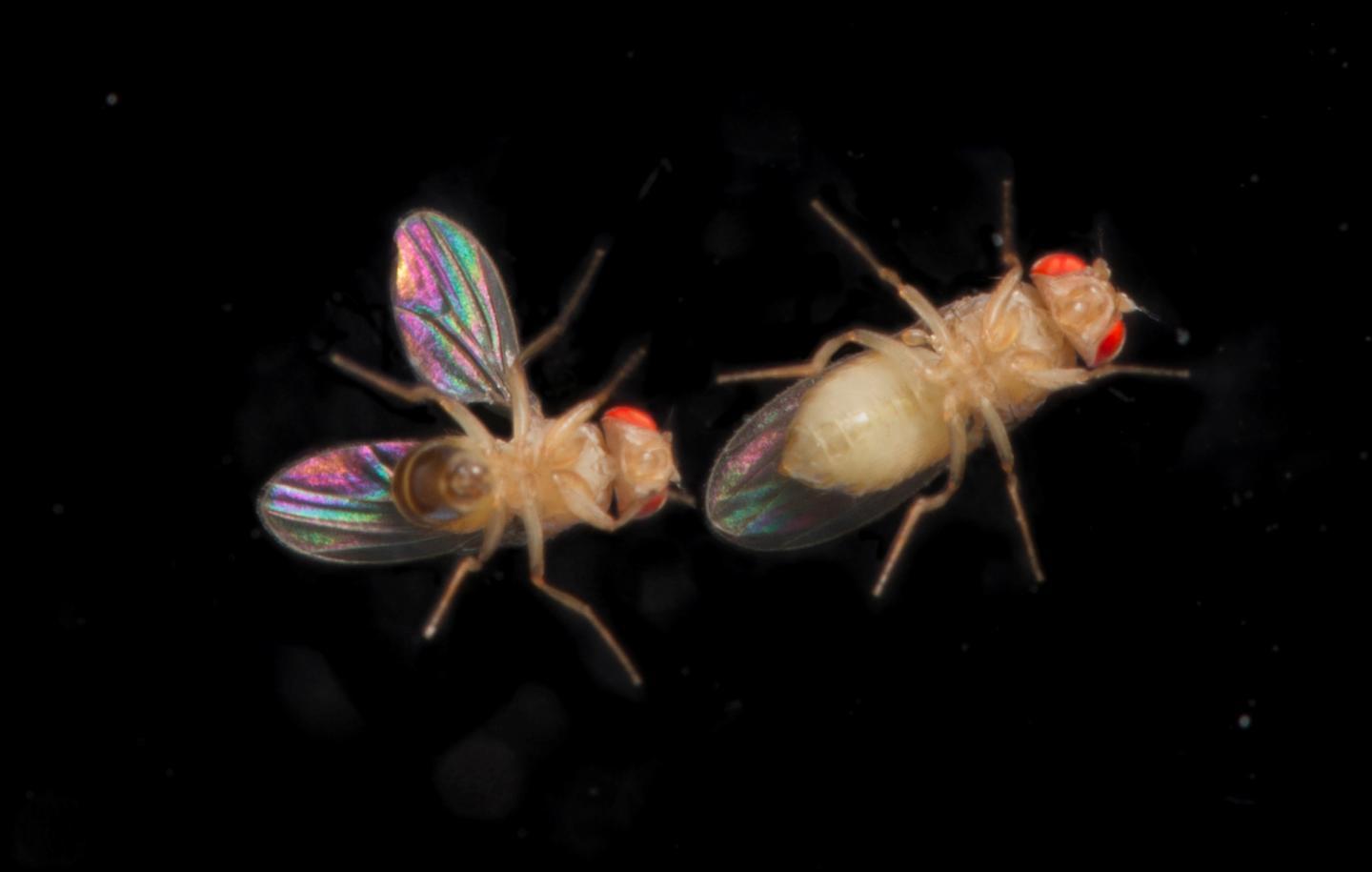
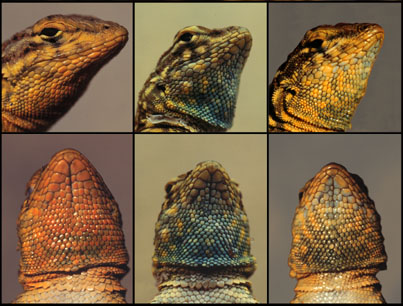
I am writing this from Durham (North Carolina), where I am currently at a so-called “catalysis-meeting” at NESCent (the “National Evolutionary Synthesis Centre”). The title of our meeting is “New resources for ancient organisms – enabling dragonfly genomics”. Briefly, we have gathered a fairly large group of researchers working on various aspects of odonate biology (including ecology, evolution, behaviour, systematics, population genetics, etc.) to create a genomics consortium, with the long-term goal of making genomic resources available for these fascinating insects so that we can recruit new talented postdocs and PhD students to our research community. This would be needed – I think – as evolutionary biology is suffering from somewhat of a low diversity in study organisms. A few classical model systems tend to attract a disproportionate number of researchers, such as Drosophila, sticklebacks, Anolis lizards, guppies, etc. But odonates are cool too! Please consider joining us, if you read this and are a young scientist who is looking for some relatively unexploited research organisms.

As an example of research in this group and in my laboratory, I would like to highlight our recently published paper in Proc. R. Soc. Lond. B. entitled “Sex differences in canalization and developmental plasticity shape population divergence in mate preferences”. This is a study that contains experimental field data that were first collected back in 2003 – over a decade ago! – which has later been complemented with population genetic analyses and laboratory experiments.
Our study organism is the banded demoiselle (Calopteryx splendens; male in A above, female in B), which co-exists with its congener the beautiful demoiselle (Calopteryx virgo; male in C, female in D, above) in a patchy network of sympatric and allopatric populations in southern Sweden. What we show in this paper is that there is pronounced population divergence in both male and female mate preferences towards heterospecific mates, in spite of these weakly genetically differentiated populations being closely connected through extensive gene flow. Whereas females learn to recognize mates, males do apparently discriminate against females already when being sexually naive, revealing differential and sex-specific plasticity in mate preferences. Males are therefore more canalized and females more plastic in their mate preferences.
Interestingly, these sex-differences in developmental plasticity and canalization are also scaled up and shown at the between-population level: females show strong population divergence in mate preferences compared to males, presumably related to their higher plasticity. This suggests that plasticity can and does play some role in population divergence, even in the face of gene flow, which is of some principal interest to evolutionary biologists, and fits with ideas proposed by Mary Jane West-Eberhard in her book “Developmental plasticity and evolution”, but also with a recent population genetic model by Maria Servedio and Reuven Dukas on the population genetical consequences of learned mate preferences.
Given our results in this study, one could perhaps expect me to show some enthusiasm for the recent opinion-paper by Laland et al. in Nature entitled “Does evolutionary theory need a rethink?” But, as a matter of fact, I do not like the opinion piece by Laland et al., and I think it is one of those opinion articles that would fit better as a blog post. As it stands now, the opinon article by Laland et al. gives a misleading impression of a very divided scientific community and results in a confusing discussion for discussion’s sake.
Laland et al. argue that developmental plasticity, niche conservatism and some other factors are important in evolution, and so far I agree with them. They then go on to make various strong (but in my opinion very biased and sometimes unsubstantiated) claims that evolutionary theory needs to be changed substantially and radically. They argue for an “Extended Evolutionary Synthesis” that should replace the current Modern Synthesis. It is a bit unclear to me, first why we need an EES, second to what extent the current paradigm stops anyone from doing the research he or she wants, and third, what this EES would actually contain that makes it so urgently needed. The authors are quite vague on this point. In my opinion, far too many opinion articles have been published about the need for an EES, and far too little rigorous empirical or theoretical work has been performed, in the form of critical experiments, formal theory or mathematical modelling.

The EES is actually not an invention of Laland et al.; the term was first coined by former evolutionary biologist Massimo Pigliucci, who is today a professor in philosophy, after he has left evolutionary biology. During his relatively brief career as an evolutionary biologist, Pigliucci produced a steady stream of opinion articles and edited volumes in which he constantly questioned and criticized what he saw as “mainstream evolutionary biology” or “The Modern Synthesis”. His efforts culminated in a meeting he organized entitled “Altenberg 16”.
This meeting at Altenberg gathered a selected group of (self-proclaimed) scientific “revolutionaries” and resulted in a book entitled “Evolution – The Extended Synthesis”. What struck me, as an experimental evolutionary ecologist, was the rhetorical tone of the whole effort, the grandiose worldview of put forward by the group and the seemingly naïve belief that scientific synthesis can be organized and commanded from above, and thus be declared, rather than growing naturally from below. The meeting at Altenberg was also quite biased in terms of who were invited – further strengthening the impression of an old boys network with a very biased view of evolutionary biology, mainly grounded in philosophical, rather than empirical arguments.
However, even if we accept that science in general, and in evolutionary biology in particular, evolves and changes over time, and even if we believe philosopher Thomas Kuhn’s theory about “paradigm shifts” and “scientific revolutions”, it does not follow that a revolution will happen just because there are willing revolutionaries. This is not how political revolutions happen either, such as the French, the American, or the Russian Revolutions. Having dedicated revolutionaries is not enough; such revolutionaries are only a subjective factor. What is also needed is the objective factor: the material (or scientific) conditions necessary for a revolution (political or scientific).
Neither Laland et al. nor their predecessor Massimo Pigliucci have have convinced me that they are the leaders we should follow, or that the time for the scientific revolution or a substantial paradigm shift is waiting around the corner. Although I do not consider myself an orthodox population geneticist at all, in this case I tend to agree with population geneticist Jerry Coyne, who has previously criticized Pigliucci for being committed to BIS – Big Idea Syndrome. One symptom that somebody is suffering from BIS is initiating debates for debate’s own sake. I feel that the same criticism can be directed to Laland et al. Their rather rethorical opinion piece contains very few concrete suggestions of how to do research differently than we do today. This gives me the impression that this is mainly a debate about how to interpret the history of science, rather than being useful or providing practical advice to evolutionary biologists in their daily work.
Both Laland et al. and Pigliucci have painted a picture of evolutionary biology and the Modern Synthesis as a monolithic and dogmatic scientific paradigm that prevents researchers from asking heretical questions, such as addressing problems about plasticity. The Modern Synthesis clearly did not stop me and my co-workers from initiating our study on mate preference plasticity in damselflies. Neither is it clear to me that an EES (if it had it existed) would have helped us in any way to design our study differently than we actually did in the end. Given these considerations, I am quite convinced that the debate about the EES is truly academic (in the negative sense), as it will not lead us anywhere or provide us with any new analytical tools, tools being either empirical or theoretical. I therefore do not think that the proposed EES will have any long-lasting effect on the field of evolutionary biology – at least not as much as its proponents wish.

I am also quite frustrated by the poor scholarship of Pigliucci and Laland et al. regarding the history of the Modern Synthesis. Their rather negatively biased view of the Modern Synthesis strikes me as being a good example of a straw man argument wherein they set up the scene by making a caricature of something they do not like in the first place, and then go on to criticize that caricature. But their caricature is far from the more complex reality, richness and history of the Modern Synthesis.

A few years ago Ryan Calsbeek and I edited a book entitled “The Adaptive Landscape in Evolutionary Biology”, in which we and many others discussed the contrasting views between the population geneticists Sewall Wright and Ronald Fisher, and their legacy which still influences evolutionary biology and population genetics today. It is simply wrong to claim that was a monolithic paradigm that did not allow for radically different views on genetics, plasticity, and micro- and macroevolution. Had Pigliucci and Laland et al. read the various contributions in our book, many of which had radically different views, some of their misleading arguments could have been avoided. Critical views similar to those I have expressed in this post can be found on the blog “Sandwalk”, such as here and here.
However, I would say that there might already be an ongoing synthesis in evolutionary biology – but it is not led by Laland et al. To see what I mean here, Steve Arnold published an interesting paper earlier this year in the American Naturalist entitled “Phenotypic Evolution: The Ongoing Synthesis”. In this article, Steve argued that evolutionary biology is now in the midst of a true synthesis, wherein micro- and macroevolution are finally coming together through the integration of quantitative genetics with comparative biology, largely driven by the explosion of phylogenetic comparative models of phenotypic trait evolution.
Unlike the case for the EES, there are many more "silent" revolutionaries in the field of comparative biology who are now busy in developing analytical methods for phylogenetic comparative methods in the form of R packages and other useful tools. These new methods enable us to directly study and infer evolutionary processes and test various models and evolutionary scenarios. This is the sign of a healthy and dynamic research field: people do things, rather than just talking about the need for revolutions. Researchers in this and other fields are busy making quantitative tests, rather than spending time on verbal reasoning on the need for new syntheses. To paraphrase a legendary revolutionary (anarchist Emma Goldman): “If you can’t do any rigorous experimental procedures or statistical tests, it is not my kind of scientific revolution”.
In summary: science evolves over time, and so does evolutionary biology. Our field is very different from what it was in the early days of the Modern Synthesis – in spite of some of the claims by Pigliucci and Laland et al. Without a doubt, plasticity, niche construction, and many other phenomena mentioned by Laland et al. are worthy of study and certainly very interesting. The mistake Laland and other proponents of EES make is that they think that they are the only ones who have realized this, and that other folks outside the EES camp are not thinking deeply about these problems. I end this blog post by citing another true revolutionary (quote taken from Jerry Coyne’s blog “Why Evolution is True”):
I close with a statement by my old mentor, Dick Lewontin, who of course as an old Marxist would be in favor of revolutions: “The so-called evolutionary synthesis – these are all very vague terms. . . That’s what I tried to say about Steve Gould, is that scientists are always looking to find some theory or idea that they can push as something that nobody else ever thought of because that’s the way they get their prestige. . . they have an idea which will overturn our whole view of evolution because otherwise they’re just workers in the factory, so to speak. And the factory was designed by Charles Darwin.”