
Showing posts with label lab-meetings. Show all posts
Showing posts with label lab-meetings. Show all posts
Sunday, December 6, 2009
No lab-meeting this week (9/12)
Due to several other meetings and committments on my side, I am afraid we'll have to cancel the planned lab-meeting this Wednesday (9 December). I will be present in the Ecology Building the whole day, however, in case you need to talk to me in between the meetings. I hope we can have a regular lab-meeting the next week, before the Christmas break (16 December), in case everybody is around then. Please do not hesitate to e-mail me with suggestions for papers to read and discuss!


Sunday, September 27, 2009
Lab-meeting on population divergence in isopods and lizards
This coming Wednesday (30 September), we will discuss one manuscript by Fabrice, Anders Hargeby and me on sexual isolation and migration modification in the aquatic isopod (Asellus aquaticus) and another one by Anna, Bengt and me on colour polymorphism divergence and population genetics in Podarcis-lizards. We would like to have the input from as many as possible on these two interesting manuscripts (at least we think they are interesting, but as authors we are of course highly biased!).
We will start with the lizard manuscript at 10.00, and continue with the isopod manuscript after that. I will send out these manuscripts by e-mail to the whole group today (Monday) provided that Anna and Fabrice send me the updated last versions first. If you do not get it by e-mail, please e-mail Anna (anna.runemark@zooekol.lu.se) and Fabrice (fabrice.eroukhmanoff@zooekol.lu.se) so that they can send you the manuscripts.
Time and place as usual: "Darwin" at 10.00 on September 30 (Wednesday). Any fika volunteer?
We will start with the lizard manuscript at 10.00, and continue with the isopod manuscript after that. I will send out these manuscripts by e-mail to the whole group today (Monday) provided that Anna and Fabrice send me the updated last versions first. If you do not get it by e-mail, please e-mail Anna (anna.runemark@zooekol.lu.se) and Fabrice (fabrice.eroukhmanoff@zooekol.lu.se) so that they can send you the manuscripts.
Time and place as usual: "Darwin" at 10.00 on September 30 (Wednesday). Any fika volunteer?
Monday, August 31, 2009
Goodbye Shawn and Lisa! No lab-meeting this week

This week there will not be any lab-meeting on Wednesday (2 September), as I am catching up on various administrative work and waiting manuscripts after the ESEB-meeting in Italy. I aim for a lab-meeting next week, though, on Wednesday September 9. Suggestions for papers are welcome, and if you do not have any I suggest that we discuss a few papers about intralocus sexual conflict, which was a popular topic at the ESEB-meeting last week.
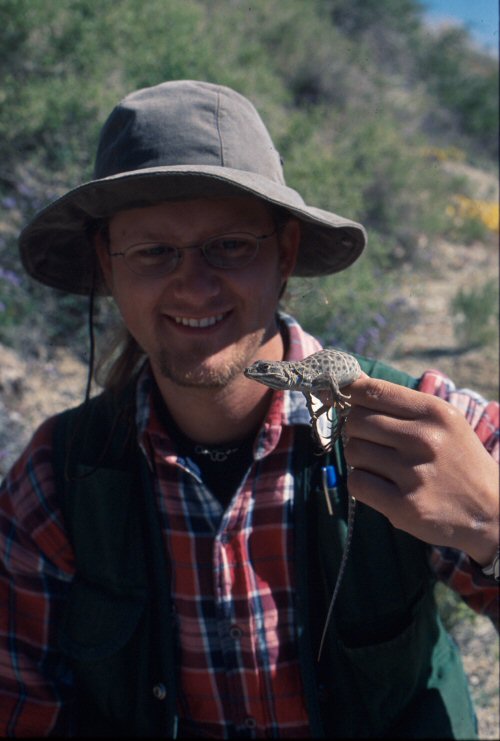
I would also like to say goodbye to our great co-workers Master's student Lisa Orr and postdoc Shawn Kuchta, who are now leaving us, after one and two years, respectively. I hope best for their future careers. We surely all hope to see you again in Lund at some point in the future. As our lab has now temporarily shrunk in size (hopefully temporarily!) it becomes even more important that we all go to the lab-meetings to get good discussions and have the necessary "critical mass" in terms of number of participants when we discuss papers.
Following some advice from Shawn and how many labs function in the US, I have therefore now decided that our lab-meetings will from now on be compulsory for the three PhD-students whom I am still the main advisor of: Anna, Tina and Fabrice. If one of you can't make it for a Wednesday meeting, you should contact me well in advance so that I know this and can cancel in time if we are not enough participants for meetings. Legitimate reasons for not participating in a lab-meeting include sick leave, maternity leave, conferences, field work or lab work outside Lund, or when I am away travelling. Lab work in Lund or manuscript writing are not legitimate reasons for absence on Wednesday meetings.
This new rule, which ultimately will be to the benefit to all of us, will start operating from September 9. The next PhD-student to defend his thesis, Fabrice, has to follow this rule at least until his dissertation on November 20 (and hopefully voluntarily after that as well). I encourage you all to also try to bring in those PhD-students for whom I am not main advisor for to get an even bigger discussion group, e. g. Josefin and Sanna. Master's students are also always very welcome. We might soon have a new Canadian Master's student from Canada (Andrew McAdam's lab) coming in next year, by the way, and two new postdocs (Sophia Engel and Machteld Verzijden) are also in the pipeline. The more participants and lively discussions in the lab-meetings the better, for you and your PhD-education. I hope that we can soon discuss some of Fabrice's thesis-chapters and a new manuscript by Anna on Podarcis-lizards in September or early October.
Monday, August 17, 2009
Two exciting lab-meetings this week!

This week, I have the pleasure to announce two lab-meetings, one on Wednesday (10.00-12.00) and the other on Thursday (10.00-12.00). Both will take place in "Darwin", as usual. I hope as many as possible will come. There will be no article to read, but interesting research presentations.
On Wednesday, Shawn Kuchta and I will present our talks that we will give at the coming European Evolutionary Biology Meeting (ESEB), that will take place in Turin (Italy) next week. Shawn will talk about selective predation on wing morphology and geometric morphometrics in calopterygid damselflies, i. e. the work he has done during his two year postdoctoral visit in Lund. Shawn will present his talk in Turin in a symposium organized by me and Alexis Chaine about the role of ecology and selective agents in evolutionary biology studies. You can find the programme here for that symposium.
As for myself, I will talk about the genetics of life-history trade-off, which is the topic of a symposium at the ESEB-meeting where I have the pleasure of being an invited speaker (the other one being Derek Roff). Our presentations will be very informal, and there will be room for suggestions of how Shawn and I can improve our presentations. We are looking forward to your feedback!
On Thursday, my colleague Almut Kelber from the department of Cell- and Organismal Biology (COB) and her postdoc Miriam will visit us to talk a little bit about our collaboration that has been ongoing the last summer about sensory physiology, colour vision and colour physiology in our model damselfly species Ischnura elegans (see picture above!). I will also give a short presentation about damselflies as model organisms in ecology and evolution. Mirjam will bring fika, and I encourage all of you who might be interested in this to join in!
Sunday, May 3, 2009
Dragonfly season has started!

This weekend I spent a few hours in the field and the first odonates have already emerged! It appears as it will be an as early season this year as last year, and we probably need to start to catch Ischnura elegans soon. Hopefully, the Calopteryx-season will still not start until early June. This means that lab-meeting on Wednesday will be at the Ecology Building (as planned), when we will see the second part of "Life in Cold Blood", although the week after is an open issue (at least to me). Depending on weather, we might do a joint field trip, although I want to keep this day open for other possibilities, depending on weather.
For this week, I suggest that we skip the TREE-article I suggested last week, as I feel it will be a bit too much with both that article (a rather heavy one!) and the movie. I hope nobody objects to this. Time and place as usual: "Darwin" at 10.15 (Wednesday 6 May). Could Shawn bring popcorn or somebody else this week?
Quizz: Which species of dragonfly is depicted above? It is a very common species that is one of the earliest fliers in the season.
Thursday, April 9, 2009
Lab meeting in the Darwin room on Wednesday the 15th of April at 10:15am
Hello everybody,
We have picked two papers for the upcoming lab meeting next week. The first one is by Masafumi Nozawaa, Yoshiyuki Suzukia, and Masatoshi Nei and is entitled ‘Reliabilities of identifying positive selection by the branch-site and the site-prediction methods’
Abstract
Natural selection operating in protein-coding genes is often studied by examining the ratio (ω) of the rates of nonsynonymous to synonymous nucleotide substitution. The branch-site method (BSM) based on a likelihood ratio test is one of such tests to detect positive selection for a predetermined branch of a phylogenetic tree. However, because the number of nucleotide substitutions involved is often very small, we conducted a computer simulation to examine the reliability of BSM in comparison with the small-sample method (SSM) based on Fisher's exact test. The results indicate that BSM often generates false positives compared with SSM when the number of nucleotide substitutions is ≈80 or smaller. Because the ω value is also used for predicting positively selected sites, we examined the reliabilities of the site-prediction methods, using nucleotide sequence data for the dim-light and color vision genes in vertebrates. The results showed that the site-prediction methods have a low probability of identifying functional changes of amino acids experimentally determined and often falsely identify other sites where amino acid substitutions are unlikely to be important. This low rate of predictability occurs because most of the current statistical methods are designed to identify codon sites with high ω values, which may not have anything to do with functional changes. The codon sites showing functional changes generally do not show a high ω value. To understand adaptive evolution, some form of experimental confirmation is necessary.
Natural selection operating in protein-coding genes is often studied by examining the ratio (ω) of the rates of nonsynonymous to synonymous nucleotide substitution. The branch-site method (BSM) based on a likelihood ratio test is one of such tests to detect positive selection for a predetermined branch of a phylogenetic tree. However, because the number of nucleotide substitutions involved is often very small, we conducted a computer simulation to examine the reliability of BSM in comparison with the small-sample method (SSM) based on Fisher's exact test. The results indicate that BSM often generates false positives compared with SSM when the number of nucleotide substitutions is ≈80 or smaller. Because the ω value is also used for predicting positively selected sites, we examined the reliabilities of the site-prediction methods, using nucleotide sequence data for the dim-light and color vision genes in vertebrates. The results showed that the site-prediction methods have a low probability of identifying functional changes of amino acids experimentally determined and often falsely identify other sites where amino acid substitutions are unlikely to be important. This low rate of predictability occurs because most of the current statistical methods are designed to identify codon sites with high ω values, which may not have anything to do with functional changes. The codon sites showing functional changes generally do not show a high ω value. To understand adaptive evolution, some form of experimental confirmation is necessary.
And the second paper is by Thomas Lenormand, Denis Roze and François Rousset and is entitled ’Stochasticity in evolution’
Abstract
The debate over the role of stochasticity is central in evolutionary biology, often summarised by whether or not evolution is predictable or repeatable. Here we distinguish three types of stochasticity: stochasticity of mutation and variation, of individual life histories and of environmental change. We then explain when stochasticity matters in evolution, distinguishing four broad situations: stochasticity contributes to maladaptation or limits adaptation; it drives evolution on flat fitness landscapes (evolutionary freedom); it might promote jumps from one fitness peak to another (evolutionary revolutions); and it might shape the selection pressures themselves. We show that stochasticity, by directly steering evolution, has become an essential ingredient of evolutionary theory beyond the classical WrightFisher or neutralistselectionist debates.
You can contact me (Maren.wellenreuther@zooekol.lu.se) if you have problems retrieving the pdf files -and I will send them to you.
All the best and happy reading, Maren
The debate over the role of stochasticity is central in evolutionary biology, often summarised by whether or not evolution is predictable or repeatable. Here we distinguish three types of stochasticity: stochasticity of mutation and variation, of individual life histories and of environmental change. We then explain when stochasticity matters in evolution, distinguishing four broad situations: stochasticity contributes to maladaptation or limits adaptation; it drives evolution on flat fitness landscapes (evolutionary freedom); it might promote jumps from one fitness peak to another (evolutionary revolutions); and it might shape the selection pressures themselves. We show that stochasticity, by directly steering evolution, has become an essential ingredient of evolutionary theory beyond the classical WrightFisher or neutralistselectionist debates.
You can contact me (Maren.wellenreuther@zooekol.lu.se) if you have problems retrieving the pdf files -and I will send them to you.
All the best and happy reading, Maren
PS: Any Fika volunteers? Please send me an email if you are bringing something to the meeting.
Friday, March 20, 2009
Lab-meeting next week?
This is a suggestion to anyone in the lab to think of a possible article for next week's lab-meeting on Wednesday. I will myself be busy planning the "Biology-Physics Interface"-workshop on Wednesday afternoon, so I will not have time to suggest an article. But I would strongly encourage "somebody" to suggest an article, and post the information here, on this blogg. Ideally, you should both write a few sentences (5-10) in a bloggpost and provide a link to the article so that it can be downloaded by members of our laboratory. So please feel free to suggest something for Wednesday next week!
Saturday, March 14, 2009
First bloggpost - Welcome!

Dear All,
Welcome to this blogg, and the first bloggpost - ever!
Above you see a picture of one of Sweden's latest arrivals in its damselfly fauna: The Small Red-eyed damselfly (Erythromma viridulum). The males in this species have characteristic red eyes, which contrasts markedly to the otherwise blue colouration of the body. The picture was taken by me in late summer (July) 2008 at "Råbydammen" between Dalby and Lund.
This enigmatic damselfly species has exploded in Skåne and is one of the most common damselfly species in newly created ponds, after only a few years. It is only one of several examples of southernly odonate species that are currently expanding northwards in Europe - presumably due to climate change.
And now over to something different:
Blogs and the bloggosphere is here to come - accept it and do not fight back. This is the future, we better adjust to it as scientists and learn the new tools of communication. It is worth putting a little bit extra effort to do this - because it will benefit you in your future career.
I hope we will all contribute to make this blogg truly interactive, in which all contribute by commenting and writing posts (for those who have gotten permission from me to do so). Only by keeping this blogg live and active will it be interesting and useful. You should also consider to post interesting links about research news or scientific papers that are likely to be of interest, not only to our research laboratory, but also to a broad audience of ecologists and evolutionary biologists. Science politics and science policy news - from Sweden, the US or other parts of the world is of course also of interest here. As will be news about our field work or scientific meetings that we have attended and where you might want to share your thoughts.
But the primary function of this blogg will be for our weekly lab-meetings. I expect all who propose papers to write a shorter or longer bloggpost (a minimum of five sentences, and longer if you wish), where you explain why you chose this paper and why you thought it might be important. You should also add a link to the article so that other lab-members could download the paper and prepare for the meeting. Afterwards, if you or somebody else in the lab has some thought(-s) about the paper or new idéas that you might want to share with the rest of us: please post it here, or add a comment! In this way, we can document the scientific and intellectual processes in our laboratory.
So: get going, log on and add your own bloggposts! It is not difficult and you are all intelligent people. I know, because I am your advisor! If an old dinosaur like me can blogg - you can too! Why wait? How many hours will it take until the next blogg post will appear by anyone from my laboratory? And when will the first comment appear on this blogg? Soon, I hope...
Looking forward to many interesting posts by you soon!
Subscribe to:
Posts (Atom)