Former PhD-student Jessica Abott and I have a forthcoming article ("Early view") in Evolutionary Ecology Research (EER) that might be of interest. It deals with intersexual genetic correlations in different female colour morphs of the damselfly Ischnura elegans, that we have studied intensively in our lab over the last ten years.
These intersexual genetic correlations differ significantly between the different female morphs, the most striking pattern being higher intersexual genetic correlations ("more male-like") in the androchrome (male-mimicking) female morph. The paper can be found here, and the title is "Morph-specific intersexual genetic correlations in an intraspecific mimicry system". Enjoy!

Monday, November 30, 2009


New ads from Google
You will note that I have now added ads from Google's AdSense, and I encourage you to click on these as often as you can! The reason is that the blogg will earn some revenue each time you click on these adds, something which is clearly needed these days of shrinking funding. When the governmental funding agencies shrink, we will have to rely on the market!
Monday, November 23, 2009
Lab-meeting on November 25: signalling sexual and species identity
On Wednesday (November 25), I was thinking that we should do two things during our weekly lab-meeting:
1. We will start by discussing the Nature-paper by Billeter et al. of how Drosophila males and females signal sex and species identity using pheromones ("CHC:s").
Tom Gosden wrote about this paper in an earlier bloggpost, and it seems quite exciting also to those of us who are not particularly interested in pheromone communication. Signalling sex and species identity is clearly a general problem of interest to many evolutionary biologists, and not only those working with Drosophila. The paper can be downloaded here.
2. We will also give Anna Runemark som input on her "half-time seminar" that will take place next week at the Animal Ecology department meeting. Anna brings her laptop and some idéas of her presentation, and the rest of us provide feedback to help her.
Same time and place as usual: "Darwin"-room at 10.00, Wednesday November 25. Any fika-volunteer?
Saturday, November 14, 2009
An exciting week with the phenotype in the centre of focus: Thesis nailing, lab-meeting (18 November) and dissertation
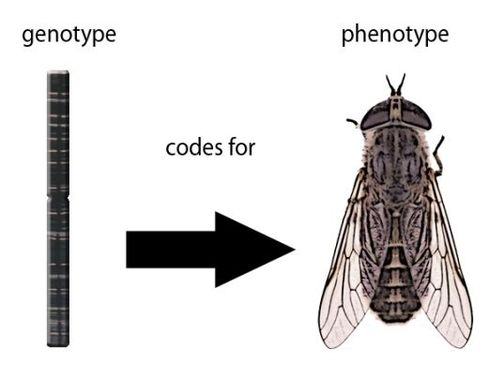
We have an exciting week in front of us, starting with the nailing of Fabrice Eroukhmanoffs PhD-thesis on Monday 16 October at 15.00. This ceremony will take place at "The Oak" in the bottom floor of the Ecology Building, and drinks will of course be served. Hope to see you all there!
On Wednesday (18 November), we will have our regular lab-meeting in "Darwin" at 10.00. Fabrice will show his Powerpoint-presentation to get some last feedback before the thesis defence on Friday 20 November. We will also discuss a recent paper by David Houle in the journal PNAS, where he suggests that time is now mature for the formation of a new scientific field: "Phenomics". After all the other "-omics"-revolutions in biology (genomics, transcriptomics and proteomics), Houle suggests that we should now return to the most interesting unit of evolution, and what made most of us interested in biology in the first place: The Phenotype. In spite of all the many advances in genomics and other reductionistic fields in molecular biology, our knowledge about how phenotypes evolve, and how they should be measured and quantified is still quite limited. Hopefully, this paper will open up our eyes for a bright future in the field of evolutionary ecology, and give some new idéas for research. You can download the paper here. If the links do not work, contact me or Anna Runemark (anna.runemark@zooekol.lu.se) and try to get a PDF from us instead. By, the way, do we have any "fika-volunteer" on Wednesday morning?
The exciting week does not end on Wednesday, luckily. On Thursday, Fabrice's thesis opponent, Professor Andrew Hendry from McGill University (Canada) will give a research seminar at 13.00 in the "Blue Hall" (note the time: it is one hour earlier than the "official" Thursday seminar which starts at 14.00). Hendry has done a lot of research on rapid evolutionary change in natural populations, gene flow, "eco-evolutionary dynamics" and ecological speciation. Thetitle of Andrew's talk on Thursday 19 November is:
"Ecological speciation (or the lack there-of) in sticklebacks, guppies and Darwin's finches"
Finally, this exciting week with the phenotype in focus will have a grand finale on Friday November 20 in the "Blue Hall" at 10.00, when Fabrice will defend his thesis. I hope as many as possible can and will join in to see Fabrice defending himself against Andrew Hendry, who is known to be a very critical and detail-oriented scientist. Most welcome!
Monday, November 2, 2009
New PhD-thesis in the lab: Fabrice Eroukhmanoff

I am pleased to announce that a new PhD-thesis will now be defended in our group: Fabrice Eroukhmanoff's Magnum Opus "The interplay Between Selection and Constraints on adaptive Divergence and Phenotypic Evolution".
This is the third Ph.D.-student that has finished his/her thesis in our lab, the previous two were Jessica Abbott (2006) and Tom Gosden (2008). You can find an abstract and more informaton about the thesis here. Well done Fabrice!
The thesis will be defended on Friday November 20 in the Blue Hall (Ecology Building). The external opponent will be Professor Andrew Hendry from McGill University Canada, and the thesis committé will consist of Professors Anna Qvarnström (Uppsala University), Karin Rengefors (Limnology, Lund University) and Janne S. Kotiaho (University of Jyväskylä, Finland). The thesis defence is open to everyone, and I encourage you to participate in this exciting event.
Friday, October 30, 2009
Rapid adaptive divergence and FST-QST

Time for another study from the Svensson Lab:
In a recent study published (in early view) in Molecular Ecology, we (Erik Svensson, Anders Hargeby and myself) have quantified phenotypic and quantitative genetic divergence between two ecotypes of our favorite study organism, the aquatic isopod (Asellus aquaticus) in two lakes in southern Sweden. We have tried to assess the relative role of selection and genetic drift during rapid and parallel ecotype divergence events. We demonstrate that for seven quantitative traits, the average QST between ecotypes is significantly greater than the mean FST, which is clearly consistent with a role for divergent selection causing phenotypic and genetic differentiation of these ecotypes. However, some QST-values for traits linked to size-related morphology fall within the distribution of neutral FST-values, whereas it is not the case for pigmentation traits. Our study therefore underscores the need for caution when evolutionary inferences are made from FST-QST analysis.
For instance, many FST-QST studies have investigated large number of populations and traits, without prior ecological and historical knowledge of the system. This aspect is important because if, like it is in our case, you investigate a case of parallel evolution, you may use specific pairwise comparisons as "replicates", and others as “controls”. The hierarchical structure of the populations and their history might therefore be of importance.
Second, neutral markers may sometimes not be so neutral, thus it is important to compare the distributions of FST with the distributions of QST, and not their means, if one wants to infer the role of selection in the divergence process. All these issues have been reviewed in a very nice paper by Whitlock also published in Molecular Ecology in 2008 and that we have discussed in a previous lab-meeting.
A last point I would like to insist on is that of course, this kind of approach will never beat the advantages of directly measuring selection in the wild. However, it might also be tricky to determine is selection is driving divergence between two populations even when estimating selection in the wild, since it is often difficult to encompass all its components at once, for example linked to fecundity, mate choice, intrinsic survival, predation, etc. Thus, by using FST-QST comparisons, one will estimate the role of the “net” selection differential between populations and its role during divergence. And this is also an advantage.
Well, I hope it inspired you to read our paper…
Thursday, October 29, 2009
Smells like?

So a few CHC’s in D.melanogaster have been shown to control male-male mating interactions, influence male courting rates and act as a species barrier to other Drosophila males. Think about that next time you try a unisex eau de toilette.
Abstract:
Subscribe to:
Posts (Atom)