Friday, November 21, 2014

Lab meeting Nov 25th: Two talks!

Posted by Anna Nordén and Anais Rivas Torres

Next lab meeting Anais and I will give one talk each. Anais will present some of her results from her MSc thesis and I will show some preliminary results and how that is connected to my PhD project. I am going to give the talk at a worm meeting later next week. We would be happy to get any comments on results and tips on how to improve the presentation! Below are two short abstracts summarizing what we will talk about.

Time and place as usual (Tuesday 10:30 in Argumentet, Ecology Building 2nd floor).

Looking forward to see many of you there!

Anais: Neutrality or coexistence through negative frequency dependence?

Through my research I want to investigate why two related species (Calopteryx splendens and Calopteryx virgo) could coexist, although they have similar niches.
Nowadays, one cannot a priori assume that each and every species found together in a local community need to coexist in the long run. Instead, local community composition might follow a neutral community dynamics. However, ecologically equivalent species cannot coexist infinitely, so there needs to exist some coexistence mechanism(-s) if two or more species are going to continue to coexist locally. The aim of my Master thesis will be to experimentally investigate and search for potential co-existence mechanisms between two ecologically similar damselfly species within the same genus(C. virgo and C. splendens). In particular, I will investigate the possibility of co- existence through negative frequency dependence mechanisms, i.e. that a species does better when it is rare than when it is common.


 Anna: Experimental evolution in Macrostomum lignano

Photo by Micha Eichmann, Schärer Group
Sexual antagonism occurs when the same allele for a gene has opposite fitness effects for females and males. Although generally studied in sexual organisms, sexual antagonism may occur in hermaphrodites and may be one means by which genetic variation is maintained. To investigate this, we measure the response to sex-limited evolution in populations of the flatworm Macrostomum lignano to determine if a hermaphrodite can evolve sex-differentiated chromosomes. A GFP (green fluorescent protein) locus incorporated into the worm’s DNA is used as a dominant sex-determining gene by letting it pass through either eggs (‘female’ treatment) or sperm (‘male’ treatment) in each generation. After many generations, this creates an accumulation of standing genetic variation of sex-specific fitness genes linked to the GFP locus. Additionally, we use quantitative genetics to measure sexually antagonistic genetic variation for fitness in M. lignano. This allows us to look at the heritability of fitness via male and female sex roles, and the amount of genetic diversity that results from our sex-limited evolution experiment. Here, we present preliminary data on the heritability of the GFP marker through male and female sex roles.

Sunday, November 16, 2014

What happens when eight researchers suggest there is value in multiple, alternative conceptual frameworks in evolutionary biology?

Posted by Tobias Uller

A few weeks ago EXEB discussed a commentary about the structure of evolutionary theory that I was a co-author on. I listened to the discussion and a lot of insightful things were said. Unfortunately, Erik was not able to attend but he has now shared his perspective online instead; all in friendly disagreement. Erik’s comments are quite similar to several other reactions we have had so I will highlight a few things that I think are worth noting. But if you are interested in my opinion it is no doubt more informative to simply come and discuss with me in person.

What did we publish?

The paper was an invited popular science commentary in a magazine called Nature. The editors of Nature knew we were writing a detailed academic paper (10,000 words, 250 references, currently in review). This paper attempts to explain how some critiques of contemporary evolutionary biology are conceptually aligned. Nature asked us to write a popular summary arguing that these perspectives may stimulate a rethink of certain aspects of evolutionary theory. Another team were asked to argue against this notion.

Our instructions were to write for a general audience and make it understandable and appealing to – as roughly stated by the editor - astronomers and others with a limited knowledge of evolutionary biology. We think it worked reasonably well overall, but the rhetoric on both sides naturally reflects Nature’s aim with the commentary and hence should be taken lightly. We did not know the author list of the other team (and only saw their response as it was published), but I assume they had similar instructions.

Erik thinks that this type of popular science should not be published in scientific magazines but instead posted on blogs. I do not read blogs much, but they are a good source of information about what people like about themselves and dislikes about others. Sometimes posts also help to interpret and understand science (e.g., Arild Stoltzfus' comment here). Similarly, glossy science magazines can be entertaining and informative and the many private and public responses to our commentary show that Nature indeed has a large and diverse readership. 

The main aim with this Yes/No piece was to encourage debate across disciplines about what counts as evolutionarily relevant causes and processes. This appears to have worked. So I think it is ok for Nature to publish these more informal pieces if they want. After all, magazines do not have the same aims as specialist academic journals, which may be good to remember also when we read scientific articles that are published in Nature.

Rethinking what?

Rethinking theory can mean a number of different things. Interpretation varies somewhat even among the authors of the ‘Yes’ comment. But many evolutionary biologists seem to think that as long as variation, heredity, and differential reproductive success remain central to evolutionary theory there is no such thing as a rethink.

I find this a pretty drab view of our field since it implies that we are only adding footnotes to the Origin of Species.  Indeed, this is pretty much the impression one gets from the ‘No’ comment – although their extensive Darwin references are likely there for rhetoric and journalistic effect and not because the authors think that evolutionary theory lacks progress.

Thinking about the structure and content of theory is healthy and something that all scientists should do regularly even if core aspects of our theories remain the same. The ‘Yes’ authors think that there are some important features of contemporary evolutionary biology that are problematic, including the proximate/ultimate distinction, the separation of heredity and development, and neglect of attention to the developmental origin of innovations. 

If we are to change this situation we need to rethink. But we have never claimed that this should be described in terms of revolution or a paradigm shift. Indeed, it is unlikely that fundamental insights from what we call standard evolutionary theory will be proven false. We think we can understand things even better. That is why we advocate an expansion of what counts as relevant causes of evolution – by shifting our perspective we can see things clearer.

We too have our reservations about the use of the term Extended Evolutionary Synthesis, which undoubtedly comes with some unwanted baggage. Nevertheless, naming a putative conceptual framework as it is being formulated can help to see how it differs from others. But it should not be interpreted as meaning something more than an attempt to provide a coherent perspective that differs from the prevailing view (as opposed to add-ons as the ‘No’ side and Erik appear to view things).

At the end of the day, the usefulness of a conceptual framework is measured by the extent to which it stimulates useful research. I, and my co-authors, fully agree with Erik that we need much more empirical work. But we also need ideas to guide us. We said: “We believe that a plurality of perspectives in science encourages development of alternative hypotheses, and stimulates empirical work”. 

In contrast, the ‘No’ authors appear to reverse the order and ask that empirical support precedes consideration of alternative perspectives (last page of their comment).  Because one of our main points is that conceptual frameworks channel thinking – and hence affect not only our interpretation of data but also what data we collect – this appears to be a major difference in philosophy of science between the two sides.

History Lessons and the Straw Man

Nevertheless, Erik is surely right that evolutionary biologists have not prevented him from studying how learning shapes mate choice. But on a more positive note, he also appears to have been inspired to do so by people like Mary-Jane West-Eberhard, who have argued that plasticity plays important roles in evolution. 

This theory may seem uncontroversial to some today, with the leading journal in organismal evolution recently publishing a review on the topic (which clearly shows we need more explicit empirical testing). But the idea certainly represents a, possibly incomplete, rethinking of evolutionary theory that was not very welcomed when it arrived, and is still poorly understood. If you have forgotten the discussions in coffee rooms following publication of Developmental Plasticity and Evolution, or if you have entered science more recently, it may be useful to read how the Nature reviewers of the book reacted to these ideas when they were published in 2003. Would we have vibrant work on plasticity and evolution without West-Eberhard's and others’ outspoken efforts to outline alternative conceptualizations of how evolution works?

The straw man is a helpful fellow. In a single stroke he lets you dismiss someone’s argument simply by inferring that that you understand the topic better. What is frustrating for both the ‘Yes’ and ‘No’ authors is that straw-man advocates imply that a 1700 word popular commentary written for a general audience is all that either side has to back up their points. How else could one know that these are straw man arguments?

Given that there are some quite intelligent, experienced, and well-respected researchers in both camps, assuming they got it wrong because of major gaps in their knowledge of evolutionary theory strikes me as somewhat arrogant. Admittedly, the Nature commentary is not overly helpful for evolutionary biologists, who would of course like to see the arguments fully fleshed out (as, of course, would we).

But the details of how our examples are unified conceptually, and how this differs from standard evolutionary theory, were deemed too complicated for the average reader of Nature (remember that this is not an evolutionary biology journal and that the comment was written with a very different audience in mind). Similarly, the ‘No’ response does not attempt to explain why no conceptual change is needed, presumably for the same reasons. 

This is no doubt frustrating for us all, but hardly a reason to conclude that there is no substance to the claims of either side. To avoid this situation Kevin Laland asked the ‘No’ authors if we should provide a more informative joint analysis elsewhere, but they declined.

Erik’s diagnosis is that if we would properly understand adaptive landscapes we would not have been misled to believe that new insights flow from the research fields we highlight in our commentary. It is true that the adaptive landscape is helpful for thinking about, for example, the evolutionary implications of plasticity (see e.g., Frank 2011,who also includes a personal reflection on why he was slow to appreciate the idea). We have never claimed anything else. In fact, I use this approach in my lectures on plasticity and evolution for third-year Oxford undergraduates. 

The Arnold paper Erik refers to is interesting and I encourage people to read it alongside our own contribution when it eventually becomes available. There are substantial differences in aims, approaches, and conclusions – it will be useful to examine these if you want to make up your mind on what questions are urgent to answer in evolutionary biology (through models, experiments, comparative tests and so on). I find that I learn more from people with alternative views, even if I disagree with what they say.

Evolution is a simple idea but actually quite difficult to understand in any detail. Trying to formulate an alternative perspective is, in my opinion, the best way to see if we are missing something. If you want pointers to the large literature that can provide useful insights into what this 'something' may be please do not hesitate to ask. 


Wednesday, November 12, 2014

Lab meeting: Running with the Red Queen

Posted by Katie Duryea

Following our discussions in lab meeting this week, I propose we devote next week's lab meeting to discussing a recent paper by Brockhurst et al. on the Red Queen hypothesis.

The Red Queen hypothesis was first proposed by Van Valen in 1973 to describe how interactions among species can often be a rapid driving force in evolution. This is because evolutionary change in one species may be matched by coevolutionary change in another species. Or, to make the analogy with Lewis Carroll's Red Queen, a species must be continually adapting just to keep pace with its enemies.

"Now, here, you see, it takes all the running you can do, to keep in the same place. If you want to get somewhere else, you must run at least twice as fast as that!" -Lewis Carroll, 1871

Since it was first proposed by Van Valen over 40 years ago, the Red Queen process has been applied to a number of inter and intraspecific conflicts (including intragenomic conflict and sexual conflict). In their recent paper, Brockhurst et al. develop a framework for distinguishing three modes of Red Queen dynamics based on the mode of selection (fluctuating or directional) and the genetic architecture of the traits under selection. Does this framework help us to better understand evolutionary conflicts? Let's discuss! 

When: Tuesday, November 18, 10:30
Where: Argumentet, 2nd floor, Ecology building

Running with the Red Queen: The Role of biotic conflicts in evolution

Abstract

What are the Causes of Natural Selection? Over 40 years ago, Van Valen to proposed the Red Queen hypothesis, Which emphasized the primacy of conflict biotic over abiotic forces in driving selection. Species must continually evolve to survive in the face of evolving Their enemies, yet on average Their fitness remains Unchanged. We define three modes of the Red Queen Coevolution to unify bothering fluctuating and directional selection within the Red Queen framework. Empirical Evidence from natural interspecific antagonisms Provides support for each of These modes of Coevolution and Suggests That They thwart operate Simultaneously. We argue That understanding the evolutionary forces Associated with interspecific interactions requires incorporation of a community framework, in Which new interactions Occur frequently. During Their early Phases, These newly Established interactions are likely to drive the evolution of Both parties. We argue Further That a more complete synthesis of the Red Queen forces requires incorporation of the evolutionary conflicts within species That Arise from sexual reproduction. Reciprocally, taking the Red Queen's perspective advances our understanding of the evolution of These intraspecific conflicts.

Tuesday, November 11, 2014

Plasticity in mate preferences and the not-so-needed Extended Evolutionary Synthesis (EES)

 Posted by Erik Svensson

This post was initially published as guest blog on Andrew Hendry's group blog "Eco-Evo-Evo-Eco". I re-publish the post here, with kind permission from Andrew, who will also write a guest blog on the EXEB blog soon. Note that the views expressed in the post below are entirely my own, and not necessarily shared by all members of EXEB. In particular, I expect our EXEB colleague Tobias Uller to disagree with some of the points and the message in this post, as Tobias was one of the co-authors on the Laland et al. paper that I criticize below. However, Laland et al. asked for a debate - and a debate it is!

Original post follows below:

Andrew Hendry at McGill was kind enough to invite me to write a guest post at his blog, where I would explain why odonates (“dragonflies and damselflies”) are great study organisms in ecology and evolution, and I happily grabbed this opportunity. Here I will try to put our research and our study organisms in a somewhat broader context, briefly discuss the role of plasticity in evolution and whether we would need a so-called “Extended Evolutionary Synthesis” or EES, as has recently been argued by some.

I am writing this from Durham (North Carolina), where I am currently at a so-called “catalysis-meeting” at NESCent (the “National Evolutionary Synthesis Centre”). The title of our meeting is “New resources for ancient organisms – enabling dragonfly genomics”. Briefly, we have gathered a fairly large group of researchers working on various aspects of odonate biology (including ecology, evolution, behaviour, systematics, population genetics, etc.) to create a genomics consortium, with the long-term goal of making genomic resources available for these fascinating insects so that we can recruit new talented postdocs and PhD students to our research community. This would be needed – I think – as evolutionary biology is suffering from somewhat of a low diversity in study organisms. A few classical model systems tend to attract a disproportionate number of researchers, such as Drosophila, sticklebacks, Anolis lizards, guppies, etc. But odonates are cool too! Please consider joining us, if you read this and are a young scientist who is looking for some relatively unexploited research organisms.


As an example of research in this group and in my laboratory, I would like to highlight our recently published paper in Proc. R. Soc. Lond. B.  entitled “Sex differences in canalization and developmental plasticity shape population divergence in mate preferences”. This is a study that contains experimental field data that were first collected back in 2003 – over a decade ago! – which has later been complemented with population genetic analyses and laboratory experiments.

Our study organism is the banded demoiselle (Calopteryx splendens; male in A above, female in B), which co-exists with its congener the beautiful demoiselle (Calopteryx virgo; male in C, female in D, above) in a patchy network of sympatric and allopatric populations in southern Sweden. What we show in this paper is that there is pronounced population divergence in both male and female mate preferences towards heterospecific mates, in spite of these weakly genetically differentiated populations being closely connected through extensive gene flow. Whereas females learn to recognize mates, males do apparently discriminate against females already when being sexually naive, revealing differential and sex-specific plasticity in mate preferences. Males are therefore more canalized and females more plastic in their mate preferences.

Interestingly, these sex-differences in developmental plasticity and canalization are also scaled up and shown at the between-population level: females show strong population divergence in mate preferences compared to males, presumably related to their higher plasticity. This suggests that plasticity can and does play some role in population divergence, even in the face of gene flow, which is of some principal interest to evolutionary biologists, and fits with ideas proposed by Mary Jane West-Eberhard in her book “Developmental plasticity and evolution”, but also with a recent population genetic model by Maria Servedio and Reuven Dukas on the population genetical consequences of learned mate preferences.

Given our results in this study, one could perhaps expect me to show some enthusiasm for the recent opinion-paper by Laland et al. in Nature entitled “Does evolutionary theory need a rethink?” But, as a matter of fact, I do not like the opinion piece by Laland et al., and I think it is one of those opinion articles that would fit better as a blog post. As it stands now, the opinon article by Laland et al. gives a misleading impression of a very divided scientific community and results in a confusing discussion for discussion’s sake.

Laland et al. argue that developmental plasticity, niche conservatism and some other factors are important in evolution, and so far I agree with them. They then go on to make various strong (but in my opinion very biased and sometimes unsubstantiated) claims that evolutionary theory needs to be changed substantially and radically. They argue for an “Extended Evolutionary Synthesis” that should replace the current Modern Synthesis. It is a bit unclear to me, first why we need an EES, second to what extent the current paradigm stops anyone from doing the research he or she wants, and third, what this EES would actually contain that makes it so urgently needed. The authors are quite vague on this point. In my opinion, far too many opinion articles have been published about the need for an EES, and far too little rigorous empirical or theoretical work has been performed, in the form of critical experiments, formal theory or mathematical modelling.


The EES is actually not an invention of Laland et al.; the term was first coined by former evolutionary biologist Massimo Pigliucci, who is today a professor in philosophy, after he has left evolutionary biology. During his relatively brief career as an evolutionary biologist, Pigliucci produced a steady stream of opinion articles and edited volumes in which he constantly questioned and criticized what he saw as “mainstream evolutionary biology” or “The Modern Synthesis”. His efforts culminated in a meeting he organized entitled “Altenberg 16”.

This meeting at Altenberg gathered a selected group of (self-proclaimed) scientific “revolutionaries” and resulted in a book entitled “Evolution – The Extended Synthesis”. What struck me, as an experimental evolutionary ecologist, was the rhetorical tone of the whole effort, the grandiose worldview of  put forward by the group and the seemingly naïve belief that scientific synthesis can be organized and commanded from above, and thus be declared, rather than growing naturally from below. The meeting at Altenberg was also quite biased in terms of who were invited – further strengthening the impression of an old boys network with a very biased view of evolutionary biology, mainly grounded in philosophical, rather than empirical arguments.

However, even if we accept that science in general, and in evolutionary biology in particular, evolves and changes over time, and even if we believe philosopher Thomas Kuhn’s theory about “paradigm shifts” and “scientific revolutions”, it does not follow that a revolution will happen just because there are willing revolutionaries. This is not how political revolutions happen either, such as the French, the American, or the Russian Revolutions. Having dedicated revolutionaries is not enough; such revolutionaries are only a subjective factor. What is also needed is the objective factor: the material (or scientific) conditions necessary for a revolution (political or scientific).

Neither Laland et al. nor their predecessor Massimo Pigliucci have have convinced me that they are the leaders we should follow, or that the time for the scientific revolution or a substantial paradigm shift is waiting around the corner. Although I do not consider myself an orthodox population geneticist at all, in this case I tend to agree with population geneticist Jerry Coyne, who has previously criticized Pigliucci for being committed to BIS – Big Idea Syndrome. One symptom that somebody is suffering from BIS is initiating debates for debate’s own sake. I  feel that the same criticism can be directed to Laland et al. Their rather rethorical opinion piece contains very few concrete suggestions of how to do research differently than we do today. This gives me the impression that this is mainly a debate about how to interpret the history of science, rather than being useful or providing practical advice to evolutionary biologists in their daily work.

Both Laland et al. and Pigliucci have painted a picture of evolutionary biology and the Modern Synthesis as a monolithic and dogmatic scientific paradigm that prevents researchers from asking heretical questions, such as addressing problems about plasticity. The Modern Synthesis clearly did not stop me and my co-workers from initiating our study on mate preference plasticity in damselflies. Neither is it clear to me that an EES (if it had it existed) would have helped us in any way to design our study differently than we actually did in the end. Given these considerations, I am quite convinced that the debate about the EES is truly academic (in the negative sense), as it will not lead us anywhere or provide us with any new analytical tools, tools being either empirical or theoretical. I therefore do not think that the proposed EES will have any long-lasting effect on the field of evolutionary biology – at least not as much as its proponents wish.


I am also quite frustrated by the poor scholarship of Pigliucci and Laland et al. regarding the history of the Modern Synthesis. Their rather negatively biased view of the Modern Synthesis strikes me as being a good example of a straw man argument wherein they set up the scene by making a caricature of something they do not like in the first place, and then go on to criticize that caricature. But their caricature is far from the more complex reality, richness and history of the Modern Synthesis.


A few years ago Ryan Calsbeek and I edited a book entitled “The Adaptive Landscape in Evolutionary Biology”, in which we and many others discussed the contrasting views between the population geneticists Sewall Wright and Ronald Fisher, and their legacy which still influences evolutionary biology and population genetics today. It is simply wrong to claim that was a monolithic paradigm that did not allow for radically different views on genetics, plasticity, and micro- and macroevolution. Had Pigliucci and Laland et al. read the various contributions in our book, many of which had radically different views, some of their misleading arguments could have been avoided. Critical views similar to those I have expressed in this post can be found on the blog “Sandwalk”, such as here and here.

However, I would say that there might already be an ongoing synthesis  in evolutionary biology – but it is not led by Laland et al. To see what I mean here, Steve Arnold published an interesting paper earlier this year in the American Naturalist entitled “Phenotypic Evolution: The Ongoing Synthesis”. In this article, Steve argued that evolutionary biology is now in the midst of a true synthesis, wherein micro- and macroevolution are finally coming together through the integration of quantitative genetics with comparative biology, largely driven by the explosion of phylogenetic comparative models of  phenotypic trait evolution.

Unlike the case for the EES, there are many more "silent" revolutionaries in the field of comparative biology who are now busy in developing analytical methods for phylogenetic comparative methods in the form of R packages and other useful tools. These new methods enable us to directly study and infer evolutionary processes and test various models and evolutionary scenarios. This is the sign of a healthy and dynamic research field: people do things, rather than just talking about the need for revolutions. Researchers in this and other fields are busy making quantitative tests, rather than spending time on verbal reasoning on the need for new syntheses. To paraphrase  a legendary revolutionary (anarchist Emma Goldman): “If you can’t do any rigorous experimental procedures or statistical tests, it is not my kind of scientific revolution”.

In summary: science evolves over time, and so does evolutionary biology. Our field is very different from what it was in the early days of the Modern Synthesis – in spite of some of the claims by Pigliucci and Laland et al. Without a doubt, plasticity, niche construction, and many other phenomena mentioned by Laland et al. are worthy of study and certainly very interesting. The mistake Laland and other proponents of EES make is that they think that they are the only ones who have realized this, and that other folks outside the EES camp are not thinking deeply about these problems. I end this blog post by citing another true revolutionary (quote taken from Jerry Coyne’s blog “Why Evolution is True”):
I close with a statement by my old mentor, Dick Lewontin, who of course as an old Marxist would be in favor of revolutions: “The so-called evolutionary synthesis – these are all very vague terms. . . That’s what I tried to say about Steve Gould, is that scientists are always looking to find some theory or idea that they can push as something that nobody else ever thought of because that’s the way they get their prestige. . . they have an idea which will overturn our whole view of evolution because otherwise they’re just workers in the factory, so to speak. And the factory was designed by Charles Darwin.”

Wednesday, November 5, 2014

Lab-meeting: negative frequency-dependent selection and a rock-paper-scissor game going on in Drosophila melanogaster?


Posted by Erik Svensson

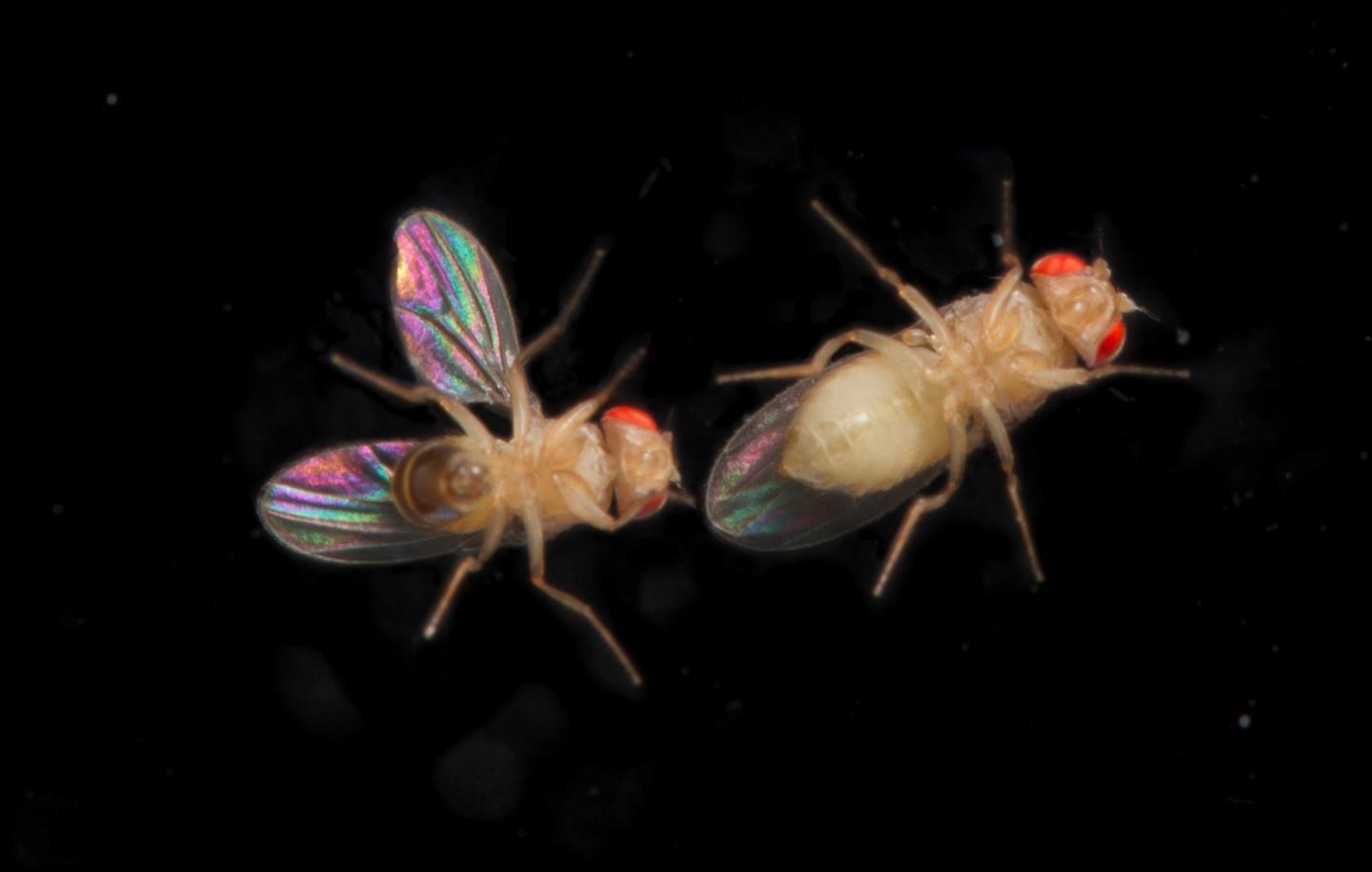
Inspired by the recent media buss of our sexual selection study on Drosophila melanogaster, which got nice coverage in major media such as New York Times and Washington Post, I would like to dedicate the next lab-meeting other fascinating aspects of fruit flies and sexual selection. It is amazing that so much still remains to be known about this well-studied animal, isn't it?

This time we will discuss an interesting question: is there evidence of a rock-paper-scissor game in D. melanogaster, and if so does it maintain genetic variation?

The article we will discuss was published in Molecular Ecology, and you can find it here. There is also a nice and a brief commenting article by Adam Chippindale in the same issue, which you can find here.

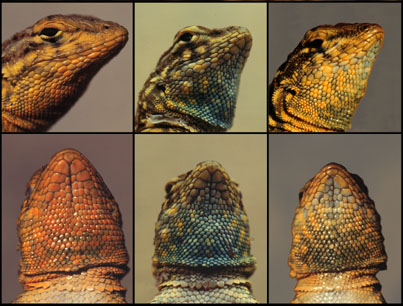
For those of you who do not know what the rock-paper-scissor game is, it is a special form of negative frequency-dependent selection, where each genotype (or morph) has its own strength and weakness, and all morphs co-exist over evolutionary time, due to a particular fitness pay off structure. The first empirical example of a rock-paper-scissor game that was described was for the colour polymorphic side-blotched lizard (Uta stansburiana) in California, by Barry Sinervo. For years, many have thought this system was unique and perhaps not very representative, but the new fruit fly study might suggest otherwise.


 I hope you will enjoy these articles and the discussion. Abstract is found below. Time and place as usual:

When: Tuesday, November 11, at 10.30
Where: "Argumentet", 2nd floor, Ecology Building.

Welcome!

Natural genetic variation in male reproductive genes contributes to nontransitivity of sperm competitive ability in Drosophila melanogaster


  1. Rui Zhang,
  2. Andrew G. Clark and
  3. Anthony C. Fiumera
Abstract

Female Drosophila melanogaster frequently mate with multiple males, and the success of a given male depends not only on his genotype but also on the genotype of his competitor. Here, we assess how natural genetic variation affects male–male interactions for traits influencing pre- and postcopulatory sexual selection. Males from a set of 66 chromosome substitution lines were competed against each other in a ‘round-robin’ design, and paternity was scored using bulk genotyping. We observed significant effects of the genotype of the first male to mate, the second male to mate and an interaction between the males for measures of male mating rate and sperm utilization. We also identified specific combinations of males who show nontransitive patterns of reproductive success and engage in ‘rock-paper-scissors’ games. We then tested for associations between 245 polymorphisms in 32 candidate male reproductive genes and male reproductive success. We identified eight polymorphisms in six reproductive genes that associate with male reproductive success independent of the competitor (experimentwise P < 0.05). We also identified four SNPs in four different genes where the relative reproductive success of the alternative alleles changes depending on the competing males' genetic background (experimentwise P < 0.05); two of these associations include premature stop codons. This may be the first study that identifies the genes contributing to nontransitivity among males and further highlights that ‘rock-paper-scissors’ games could be an important evolutionary force maintaining genetic variation in natural populations.

Congratulations to former EXEB-member Kristina Karlsson-Green and her new large grant


 Posted by Erik Svensson

There are moment's in a senior researcher's career which are especially nice. It can be when one get's a paper accepted. Or when some of your PhD-student's defend their thesis. Or when the student obtain a postdoctoral research grant. Or when the student obtains his or her first large grant or establishes him- or herself as an independent scientist. Perhaps this latter thing is the moment that is especially nice for former advisors.

And this is exactly what has happened to Kristina Karlsson-Green, among us mostly known as "Tina", who just received a prestiguous and very competitive "International Career Grant" from the Swedish Research Council (VR). This grant amounts to 1.8 million SEK/year for a period for four years, and enables Tina to establish her own research programme at the Agricultural University in Alnarp, where she is currently located, after her first postdoc in Finland in the laboratory of Anna-Liisa Laine.

I feel extremely priviligied to have had so great PhD-students, who have seldom made me disappointed, and who have clearly shown their independence by establishing themselves in the extremely competitive science world. Today I am very proud and happy that Tina can continue her research career - to the benefit of both herself, her current colleagues and to the joy and happiness of myself and all her former research colleagues in EXEB.

Well done Tina! You rock!

Monday, November 3, 2014

What is a paternal effect?


Full-size image (38 K) 

Posted by Jessica Abbott

Sorry for the late posting, but we forgot to talk about who would host the next group meeting at last week's meeting. However I've picked a fairly short paper, so hopefully people will have time to read it anyway. I thought it would be fun to discuss Crean & Bonduriansky's recent TREE paper, "What is a paternal effect?". In the paper, they argue that we have to distinguish between true paternal effects, and indirect paternal effects mediated by female plasticity.

What is a paternal effect?
Angela J. Crean, Russell Bonduriansky
DOI: 10.1016/j.tree.2014.07.009

Abstract: Maternal effects are now universally recognised as a form of nongenetic parental influence on offspring but, until recently, paternal effects were regarded as an anomaly. Although it is now clear that paternal effects are both widespread and important, their proximate basis and evolutionary consequences have received little attention and remain poorly understood. In particular, because many paternal effects are mediated by maternal responses such as differential allocation, the boundary between paternal and maternal effects is sometimes blurred. We distinguish here three basic types of paternal effect and clarify the role of maternal responses in these effects. We also outline key questions that can serve as a road map for research on the proximate basis and evolutionary implications of paternal effects.