Showing posts with label postdocs. Show all posts

Tuesday, December 6, 2016

Welcome and congratulations to two new incoming postdocs: Maarit Mäenpää and Masahito Tsuboi!

Posted by Erik Svensson

I feel very lucky that young and talented postdocs who are interested in joining my group have recently been succesful in terms of obtaining external scholarships. Here, I would like to welcome two new incoming postdocs who will officially join my lab next year (2017) and hence become part of the EXEB-environment. First, it is Maarit Mäenpää, who recently defended her PhD at Edinburgh University and who obtained a two-year postdoc grant from Emil Aaltonen Foundation in Finland. 

Second, and only a couple of days after Maarit found out about her postdoc grant, we found out that Masahito Tsuboi, who visited EXEB in August 2016 and gave a research talk on one of our Tuesday meetings, got a three-year postdoctoral position from the Swedish Research Council (VR). Masahito will spend two years abroad in Oslo (Norway) and Florida (US) in the laboratories of Prof. Thomas Hansen and Prof. David Houle, working on stasis and evolution of insect wing morphology, complemented with field work in Sweden and on odonates. 

Presentations follow below

 
 Maarit Mäenpää

Maarit I. Mäenpää


I am an evolutionary biologist, with a background in experimental research, and a deep interest in the role of different types of interactions – both ecological and social – on evolutionary processes. My research so far has focused on different aspects of life history evolution, from large scale geographic patterns in body size of geometrid moths, to the individual level effects of parent-offspring communication to the life history traits of a species of burying beetle. In Lund, I’m going to investigate phenotypic plasticity and trait canalization in genital morphology of the damselfly Ischnura elegans. My aim is to uncover the potential association of trait variation with assortative mating, and to thus explore a potential mechanism for evolutionary stasis and rapid divergence of traits. I will be using a combination of experimental and correlational approaches, in order to investigate both the existing patterns of trait variation, and to understand the underlying processes affecting it.

 Masahito Tsuboi


I am an evolutionary biologist interested in macroevolution. I have a background in phylogenetic comparative study of brain size evolution in teleost fish, where I enjoyed the effectiveness of phylogenetic comparative approach to investigate evolutionary questions in across-species, macroevolutionary time scales. However, this experience also revealed a frustrating lack of our current understanding in how evolutionary processes at macro scales are related to those at population or species levels (microevolutionary time scales). In the coming three years at EXEB, I will investigate the role of multivariate genetic constraints as the hypothetical “bridge” between micro- and macroevolution. I will do so by combining phylogenetic comparative methods with theories of evolutionary quantitative genetics. 

Sunday, August 31, 2014

EXEB shrinks - but shows overcompensatory growth: introducing new members


Posted by Erik Svensson


EXEB is our own and dynamic research environment, and as such there is (and indeed should be!) a high turnover of new and old members, and a healthy balance between inflow (newcomers) and outflow (migrants). Recently, three co-workers have left us to take up new positions.

Our most recent outgoing migrants from EXEB include Tom Gosden, who has now moved back to Australia to start a DECRA Junior Research Position, Machteld Verzijden who has moved to Aarhus University for a new postdoc and Maren Wellenreuther, who has moved to New Zeeland to commence a position as Senior Scientist at the Plant & Food Research Institute (though Maren will be affiliated to Lund part-time for the coming couple of years). We thank Tom, Machteld and Maren for their time in Lund and wish them good luck in their new positions.

Here, we also welcome some new EXEB members, which are briefly introduced below. First, we are happy to welcome Tobias Uller, who is in the process of establishing himself in Lund as a faculty member at the Biology Department, after obtaining a prestiguous fellowship from The Wallenberg Foundation. This large grant enables him to build a research group in Lund. Tobias has research interests and competence that is largely complementary to already existing expertise within EXEB, and we are looking forward to integrate both him and his forthcoming PhD-students and postdocs to our research environment. His main interests is the role of developmental plasticity in evolution, and he will work with both invertebrates (Daphnia) and reptiles (lizards) to study these important questions.

Test
Tobias Uller

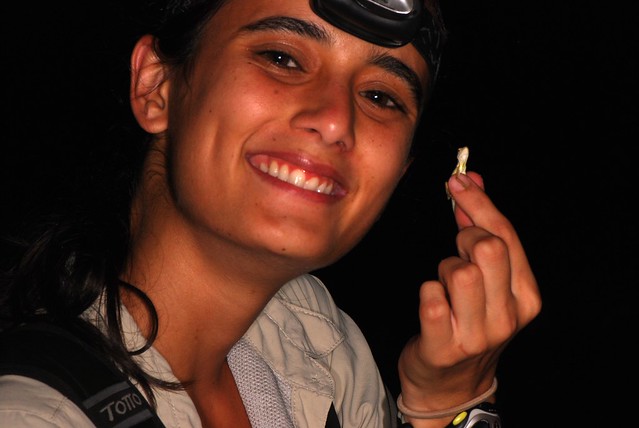
We also welcome our new PhD-student Beatriz Willink, who is from Costa Rica and who has a research background as a herpetologist, with special interests in colour polymorphisms and sexual selection. Beatriz will work under my supervision and will focus on the macroevolutionary consequences of sexual selection and colour evolution in Coenagrionidae ("pond damselflies"), using a combination of field experiments, observations and comparative approaches. She obtained a scholarship from The World Bank to do her PhD in Lund and she has already integrated quite well in to the EXEB environment, as she has been here for one field season and several months.  

Beatriz Willink

Next, we welcome Viktor Nilsson-Örtman as a new incoming postdoc. Viktor recently obtained a postdoctoral research grant from The Swedish Research Council (VR). He will spend the first part of this three-year grant at the University of Toronto in the laboratory of Locke Rowe, before he joins Lund and EXEB. Viktor has a strong background in ecological developmental biology, working with latitudinal variation in larval growth rates of damselflies of the genus Enallagma. Viktors expertise on the larval aquatic life-stage will largely complement our ongoing research on adult odonates, and we are looking forward to bring him in to the EXEB environment. 

20100602269 copy


                                                                      Viktor Nilsson-Örtman

Another postdoc who will join us now in late September 2014 is Katie Duryea from Dartmouth College (New Hampshire, USA), who did her PhD in the lab of Ryan Calsbeek, and who has a background as a herpetologist and Anolis-lizard biologist. Katie recently obtained a prestiguous outgoing postdoctoral fellowship from the National Science Foundation (NSF), which enables her to spend two years in Sweden and to join EXEB. Katie is interested in postcopulatory sexual selection and sperm competition, and she has a strong bioinformatic and molecular biology background, having worked also in the laboratories of Hopi Hoekstra at Harvard University and with Kelly Zammudio at Cornell University, prior to entering the PhD-programme at Dartmouth. During her postdoc in Lund, Katie will work on postcopulatory sexual selection in the polymorphic damselfly Ischnura elegans, taking advantage of soon available transcriptomic and genomic resources for this species, as well as our large outdoor cages at Stensoffa Field Station. 


Katie Duryea

Finally, we also welcome Rosa Sanchéz, who originally did her PhD at University of Vigo (Spain), and who is currently on her second postdoc in Barcelona, where she currently studies mechanisms of postzygotic isolation in mammals. However, Rosa has a solid background as an odonatologist, having worked in the laboratory of Adolfo Cordero during her PhD. Rosa will study the genomic signature of  hybridiziation between Ischnura elegans and its sister species I. graellsii in Spain. Last year, she obtained a Marie Curie Postdoctoral Fellowship from the EU, which enables her to come to Lund and join EXEB in spring 2015. 

´Rosa Sánchez

 Rosa Sanchéz


Monday, December 5, 2011

Increasing visitor traffic to our blog


The visitor statistics to this blog has been going steadily upwards since it was first launched in spring 2009 (see graph above), and last month we actually had more than 5000 hits. Although bloggers built-in visitor statistics does not separate automated searches from web-engines from individuals that are really interested in our stuff, and although it does not track "unique" visitors, I think these numbers reflect an ongoing and positive trend, and increasing awareness of our research and the blog. It is probably a safe educated guess that several hundred visitors per month read our blog and find it interesting and worthwhile to read.

Hopefully, this increase will continue in the near future, as it often takes several years to build up a new blog and "brand it". Hopefully, the blog will also help us to attract students, postdocs and other outside collaborators and also spread more efficiently information about our ongoing studies and publications.  Sofar, we have mainly used it to announce lab-meetings, but we are increasingly using it also as a vehicle to inform about recent meetings that we have participated in, as Maren did recently when she was at "Blodbadet" in Stockholm, as also Fabrice did after he went to a hybridization workshop in Scotland, and as I also I did myself when I recently visited the ASAB Winter Meeting with Machteld.

Blogs and social media do certainly not replace traditional means of scientific communication, such as peer-reviewed publications in international journals. But they are certainly an important complement, and I am more and more convinced that they can have a positive impact and "spill-over effects" on such vital things as citation rates of papers.

I would therefore encourage you all, once again, to post interesting things, short or long, on this blog, along these lines, including interesting talks you have been to, or interesting articles you have stumbled upon. Together, we might make this blog an excellent outlet for the dissemination of research, both our own and others.