Monday, May 9, 2011
The controversy over kin selection in the evolution of eusociality
In our next lab-meeting, we will dive in to the recent controversy over kin selection and its utility in explaining the evolution of eusociality in social insects. This controversy started with a provocative paper in "Nature" by Martin Nowak, Corina Tarnita and Edward O. Wilson, which you can download here. Basically, these three authors argue that kin selection is neither necessary nor sufficient to explain the evolution of eusociality, but that standard natural selection theory is sufficient. It is not surprising that this paper has been met by an outcry from many researchers in social evolution, and they have got a severe criticism in this paper, with a lot of different co-authors. Nowak et al. defend themselves against the many critics here.
Who is right? Well, it is up to us to make up our own opinion, after we have read these three papers! We will meet on Friday May 13 at 10.30 in "Argumentet" to discuss these three rather short papers.
For those of you who are interested more in this debate and want some different viewpoints, I can recommend this blogpost by Jerry Coyne who, not surprisingly, is very critical of Nowak et al. So is Richard Dawkins. For a counterpoint and an interesting perspective from a classical proponent of group selection, I can recommend this blogpost by David Sloan Wilson, who criticizes both camps, i. e. both Nowak et al. and their critics, and suggest that both have misunderstood the real issues at stake! David Sloan Wilsons blogpost has the challenging and provocative title: "137 Co-authors Can't Be Wrong - and That's The Problem".
It is certainly a sign of a healthy research field that things like these are intensively debated, and shows that evolutionary biology is as vibrant and exciting as ever, with some fundamentally important controversies that needs to be discussed.
Etiketter:
David Sloan Wilson,
Edward O. Wilson,
indirect selection,
Jerry Coyne,
kin selection,
Nature,
Nowak
Monday, May 2, 2011
Reinventing species selection with molecular phylogenies
When I was a PhD-student in Sweden in the nineties, one of the most ugly words you could say was "group selection", and the so-called "selfish-gene paradigm" of Richard Dawkins was taken as almost a religious truth. These were the days when behavioural ecology ruled much of of the scentific activities in biology in Scandinavia and Britain. Lower-level selection of selfish genes was assumed to be either the only or at least the major evolutionary force that would explain all adaptation and biological diversity. Higher-level selection, on goups, demes, populations or species, was either deemed impossible or dismissed as unimportant.
This remarkable dogmatic reductionism in Scandinavian behavioural ecology seems, in the aftermath, as both dogmatic and not very well supported by either theory or empirical evidence. Even the great population geneticist R. A. Fisher did actually believe in group selection, and for him it was mainly an empirical issue how strong it was, compared to lower-level selection of individuals and genes.
However, one thing is certain: scientific paradigms change, and clearly group-selection (or rather multi-level selection) is on the rise again. This week's lab-meeting (Wednesday May 4), we will discuss a relatively recent TREE-paper on how molecular phylogenies might be used to study the process of species selection in a statistically rigorous and empirical way. Increasing evidence suggest that macroevolutionary trends, such as increases or decreases in diversity, speciation and extinction can simply not be extrapolated from lower-level selection processes, challenging the selfish-gene paradigm. Below, you will find an abstract and a link to the paper.
Time as usual: 13.30 on Wednesday (May 4) afternoon. Place: Probably "Argumentet".
Rabovsky, M. L. & MacCune, A. R.
Trends Ecol. Evol. 25: 68-74
Abstract: Species selection as a potential driver of macroevolutionary trends has been relegated to a largely philosophical position in modern evolutionary biology. Fundamentally, species selection is the outcome of heritable differences in speciation and extinction rates among lineages when the causal basis of those rate differences can be decoupled from genotypic (within-population) fitnesses. Here, we discuss the rapidly growing literature on variation in species diversification rates as inferred from molecular phylogenies. We argue that modern studies of diversification rates demonstrate that speciesselection is an important process influencing both the evolution of biological diversity and distributions of phenotypic traits within higher taxa. Explicit recognition of multi-level selection refocuses our attention on the mechanisms by which traits influence speciation and extinction rates.
Tuesday, April 19, 2011
on the infinitesimal model...

Recently, in Thomas Hansen’s lab-meeting in Oslo, we discussed an interesting article published in PLoS Genetics (Population-based resequencing of experimentally evolved populations reveals the genetic basis of body size variation in Drosophila melanogaster). I thought I should share with you some points we discussed during this meeting, as many aspects of this study are probably of interest for you too.
1. First, one thing we really liked in this study has to do with the experimental design. To select for size they used a sieving apparatus to “filter” anesthetized flies through a series of sequentially smaller sieves. It is both elegant and simple, and could potentially inspire application in other systems that would potentially save a lot of time (including isopods for that matter).
2. Another interesting issue is to see that apparently their selection experiment partly failed as they did not observe very significant changes in size at least in one direction (increase, which is usually the “easiest”). This tells us that even with drosophila, sometimes things don’t always go smoothly, but still we were unable to really find a good explanation for this result. However, this means that what they found at the genomic level is just an underestimation of the real genetic basis for size in this species, which adds to the other point I develop below.
3. The last point we discussed, which is maybe the most interesting, is the issue of the “infinitesimal model”. The "infinitesimal model," originated by Fisher, assumes that contributions to the genetic variance are additive, relatively small and coming from many loci. The multiplication of QTL studies and other genomic approaches this last years has led to numerous discussions questioning this model, assuming that the reason for the lack of evidence for phenotypic traits controlled by few loci was more or less technological. We have ourselves discussed this issue in this very blog including when studies about human height and some QTLs found to explain just a few percents of variation. Well in light of this article it seems that it is again the case in drosophila, as control for height is seems to be largely polygenic, and the estimates presented here are even a low estimate as the methodology used is quite conservative (polymorphisms with population frequencies under 10% were not even analyzed further, and still they found hundreds of loci implicated in size evolution). So again, the “infinitesimal model” is not obsolete at all, and should tell us that combining genomics with quantitative genetics and selection analyses should be promoted like in this article. Of course, some QTL studies might work very well and find interesting results, I am not contesting this fact, but it is not the first time that even for a simple trait such as size and in other species as well, these kind of approaches show that many loci are responsible for the variation in one trait observed at the phenotypic level. On a related issue, we also thought the future path in genomics should not necessarily be to find loci under selection (as more or less everything will be “significantly” under selection now that 454- sequencing and its future replacements have become very efficient tools to generate large amounts of data) but to develop statistical models that will be able to estimate the “strength” of selection on certain genomic reasons and to relate it to phenotypes and their natural history. Well, we'll see...
ABSTRACT: Body size is a classic quantitative trait with evolutionarily significant variation within many species. Locating the alleles responsible for this variation would help understand the maintenance of variation in body size in particular, as well as quantitative traits in general. However, successful genome-wide association of genotype and phenotype may require very large sample sizes if alleles have low population frequencies or modest effects. As a complementary approach, we propose that population-based resequencing of experimentally evolved populations allows for considerable power to map functional variation. Here, we use this technique to investigate the genetic basis of natural variation in body size in Drosophila melanogaster. Significant differentiation of hundreds of loci in replicate selection populations supports the hypothesis that the genetic basis of body size variation is very polygenic in D. melanogaster. Significantly differentiated variants are limited to single genes at some loci, allowing precise hypotheses to be formed regarding causal polymorphisms, while other significant regions are large and contain many genes. By using significantly associated polymorphisms as a priori candidates in follow-up studies, these data are expected to provide considerable power to determine the genetic basis of natural variation in body size.
Take care,
Fabrice.
Saturday, April 16, 2011
From Athens with love: greetings from "His Dudeness"
I have now spent about a week at Ohio University in Athens, and as you see on the pictures I have been working hard with Shawn. Apart from discussing geometric morphometrics, predator-mediated natural selection and dragonfly wings, I have had the opportunity to participate in several discussion groups, ranging from niche conservatism in salamanders to the strength of selection in natural populations. It has been fun and entertaining.
Athens is a lovely little liberal "latte-town" in Ohio, with about 30 000 inhabitants, of which about 70 % are students and academic staff at OU. There are an impressive high number of bars and coffee shops around, and one of the most popular is the Casa Nueva, which is on the uppermost picture. There we have had many margharithas and beers and listened to some good live music.
By the way, OU scientists are impressive in their party mood and habits, we have been going out every evening, and I think I will need a loooong recovery when I am back in Sweden. I feel I have been very welcomed and well-treated during my visit, and the two research seminars I gave were very appreciated by students and faculty. I especially enjoyed discussing science with Molly Morris, who works on sexual selection in swordtails, and ecomorphologist Donald Miles, apart from Shawn, of course.
Close to Casa Nueva, on the corner in the picture above, there is an excellent T-shirt shop, where I bought the lovely T-shirt I am wearing, showing one of my favourite actors (Jeff Bridges, "The Dude") from one of may favourite movies The Big Lebowski. I use this T-shirt the first time before we go to a party (again!) tonight at Donald Miles' house. What could be a better combination than also trying out some of their excellent local beers from Ohio's microbreweries, and posing in front of the photographer (Shawn) at his motorcycle and Volkswagen bus?
Etiketter:
Athens,
Donald Miles,
Jeff Bridges,
Molly Morris,
Ohio University,
Shawn Kuctha,
The Big Lebowski
Thursday, April 14, 2011
Genetic basis of pigmentation loss and eye evolution in Asellus aquaticus
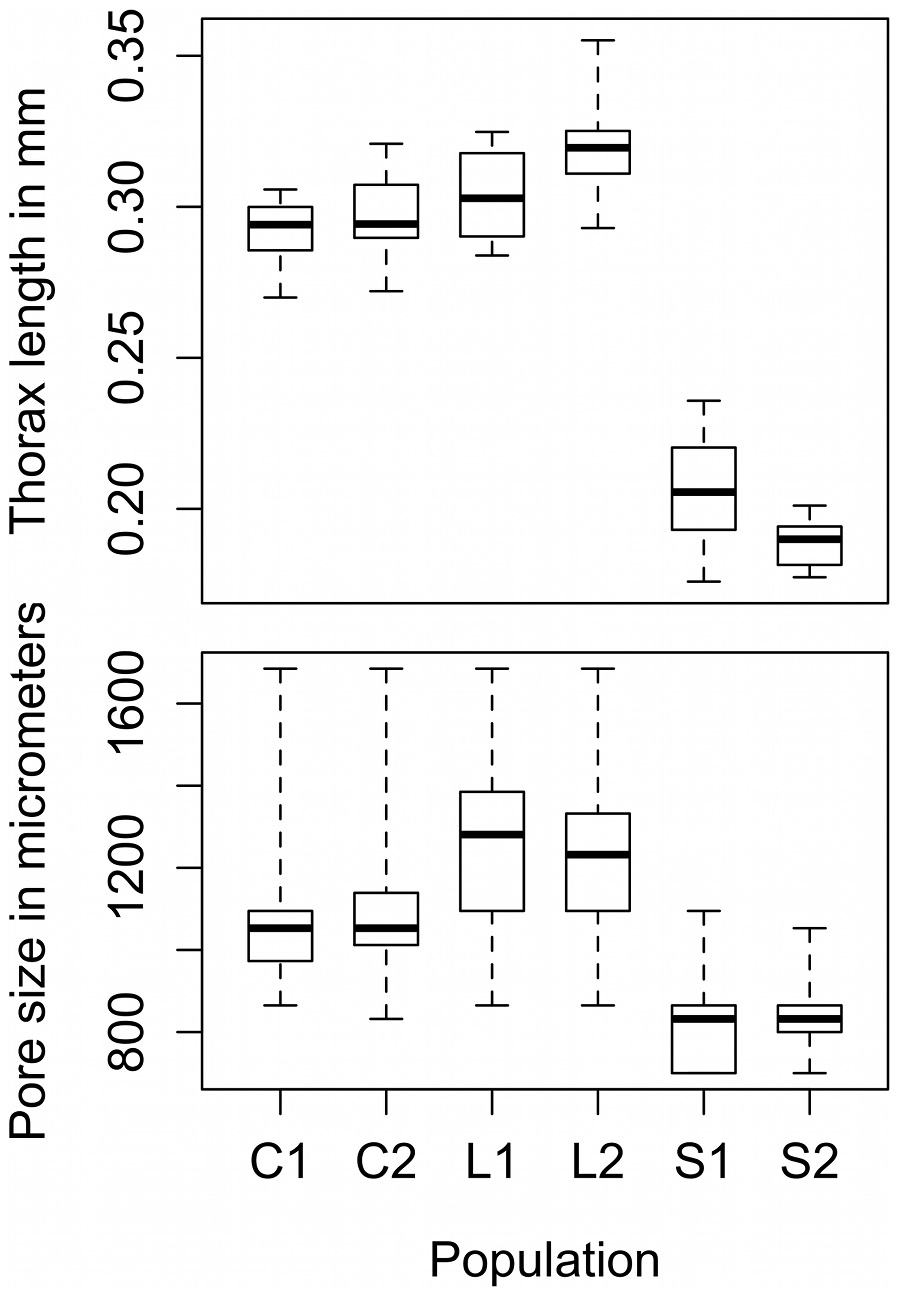
People in this lab are probably well aware of the interesting freshwater isopod Asellus aquaticus, who has contributed to two PhD-theses in our group by Fabrice Eroukhmanoff and Kristina Karlsson. Fabrice has published two thesis-papers on the quantitative genetic basis of ecotype divergence in body size and pigmentation, in Molecular Ecology and Journal of Evolutionary Biology (forthcoming).
What we demonstrated in these papers was that both morphological traits (size-traits) and pigmentation had significant additive genetic basis, both between and within populations. What we did not show, however, was the specific molecular-genetic basis of these heritable traits, i. e. which loci, how many and their genomic locations. That was not our goal, however, and Asellus aquaticus has not been a major model organism in molecular genetics.
But things seems to change. A forthcoming paper in PNAS by a US-based group presents a genome-wide linkage map involving 117 markers for Asellus aquaticus, and discuss the genetic mechanisms behind loss-of-pigmentation phenotypes and loss-of-vision phenotypes among blind, pale and cave-dwelling populations of this enigmatic species. The abstract is found below. I predict that the findings in that study will also have implications for ecotype divergence within lakes, such as between the ecotypes we have studied in southern Sweden.
What we demonstrated in these papers was that both morphological traits (size-traits) and pigmentation had significant additive genetic basis, both between and within populations. What we did not show, however, was the specific molecular-genetic basis of these heritable traits, i. e. which loci, how many and their genomic locations. That was not our goal, however, and Asellus aquaticus has not been a major model organism in molecular genetics.
But things seems to change. A forthcoming paper in PNAS by a US-based group presents a genome-wide linkage map involving 117 markers for Asellus aquaticus, and discuss the genetic mechanisms behind loss-of-pigmentation phenotypes and loss-of-vision phenotypes among blind, pale and cave-dwelling populations of this enigmatic species. The abstract is found below. I predict that the findings in that study will also have implications for ecotype divergence within lakes, such as between the ecotypes we have studied in southern Sweden.
Genetic basis of eye and pigment loss in the cave crustacean, Asellus aquaticus
Abstract
Understanding the process of evolution is one of the great challenges in biology. Cave animals are one group with immense potential to address the mechanisms of evolutionary change. Amazingly, similar morphological alterations, such as enhancement of sensory systems and the loss of eyes and pigmentation, have evolved multiple times in a diverse assemblage of cave animals. Our goal is to develop an invertebrate model to study cave evolution so that, in combination with a previously established vertebrate cave system, we can address genetic questions concerning evolutionary parallelism and convergence. We chose the isopod crustacean, Asellus aquaticus, and generated a genome-wide linkage map for this species. Our map, composed of 117 markers, of which the majority are associated with genes known to be involved in pigmentation, eye, and appendage development, was used to identify loci of large effect responsible for several pigmentation traits and eye loss. Our study provides support for the prediction that significant morphological change can be mediated through one or a few genes. Surprisingly, we found that within population variability in eye size occurs through multiple mechanisms; eye loss has a different genetic basis than reduced eye size. Similarly, again within a population, the phenotype of albinism can be achieved by two different genetic pathways-either by a recessive genotype at one locus or doubly recessive genotypes at two other loci. Our work shows the potential of Asellus for studying the extremes of parallel and convergent evolution-spanning comparisons within populations to comparisons between vertebrate and arthropod systems.
Etiketter:
albinism,
Asellus aquticus,
caves,
ecotype divergence,
eye loss,
genetic basis,
genomics,
pigmentation
Wednesday, April 6, 2011
Visiting Jessica Ware at Rutgers University in New Jersey
I am currently visiting Assist. Prof. Jessica Ware, an increasing star on the field of odonate molecular systematics. Jessica visited our lab about a year ago, and I am here to discuss future collaborative efforts. Jessica is currently running a lot of interesting projects on odonate groups like Libelluloidea and Synlestidae, and is dating evolutionary radiations, examining lineage-through-time plots and trying to understand macroevolutionary patterns and dymamics of diversification in this fascinating insect group.
We are both having a great time, and Jessica says hello to everyone in the lab in Lund. Tomorrow we are continuing our scientific discussions about collaborations, and on Thursday we are going to another campus to meet some other colleagues, among them (hopefully!) legendary evolutionary biologist Robert Trivers. Last year, PhD-student of ours Anna Runemark also visited Rutgers, and worked in the lab of molecular population geneticist Jody Hey, learning how to analyze directional gene flow and estimation of ancestral population sizes using Bayesian analytical techniques.On Friday, we will go to New York ("The Big Apple") and visit the American Museum of Natural History, were we hopefully can take a look at some of the fossil specimens of extinct giant dragonflies of the genus Meganeura.
Newark is a strange city: modern and with high buildings, but also some scaringly ruins in the city centre that reminds me of scenes from the HBO-show "Sopranos". Apparently many movies are recorded in Newark, when director wants slum scenes! In the 60-ties, the city was apparently very violent and a stronghold for the legendary Black Panther Party, the legendary liberation movement for African-americans.
Tuesday, April 5, 2011
Sparrow thoughts from Oslo
Well, after a few weeks of "getting used to", life is now going very well in Oslo. As some of you already know, I am working on a post-doctoral project with Glenn-Peter Saetre and Thomas Hansen at CEES (Centre for Ecological and Evolutionary Synthesis, Department of Biology) for the next 2 years. My project is centered around questions related to the evolution of genetic architecture during hybrid speciation. Hybrid speciation is a special case of speciation where hybridization leads to the evolution of a new lineage reproductively isolated from its two parental species. For those interested, there will be a symposium organized by Frospects in October 2011 on hybridization and speciation, and you still have some time to apply if you want (See Evoldir).

Recently, Glenn-Peter Saetre and coworkers have obtained the first genetic evidence for homoploid hybrid speciation in birds (soon to appear in Molecular Ecology). They showed that the Italian sparrow (Passer italiae) is a stabilized and uniform hybrid taxon that originated from past events of hybridization between two divergent parental species, the house sparrow (P. domesticus) and the Spanish sparrow (P. hispaniolensis). The two parental species differ in a number of functionally important traits, including melanin-based plumage coloration. This system provides excellent opportunities to study the genetic architecture of secondary sexual traits, as adult males breeding plumage differs between species and it could play a role in reproductive isolation.

Hybrid speciation involves fusion and stabilization of two differentiated genomes. I strongly believe that recent theoretical and technological advancements can now enable the thorough investigation of speciation processes at different genetic levels, and that in the case of hybrid speciation, new insights into much more general evolutionary processes could be gained.
Along with a former PhD student from Lund, Fredrik Haas, I am currently producing first generation hybrids and backcrosses in aviaries to recreate the first step of this process and will compare these data with data from Italian sparrows both at the phenotypic level (using line-cross analyses and quantitative genetic models), at the genomic level (using 454 sequencing) and at the phenotype-genotype map level (e.g. using theoretical models on epistasis).
Of course this is only the beginning, and I will tell you more when we have real data at hand, but for now here is a few pictures of the aviaries and our first eggs (I am really enjoying working with birds, I must say, and this almost comes as a surprise to me...), and also a picture of putative F1 hybrids from a natural history museum which indeed look quite similar to Italian sparrows, at least in some aspects. And by the way if you have any ideas, suggestions or just if you are simply interested, do not hesitate to contact me.
Otherwise, the department is not much different from Lund except it is much bigger, and with less “subgroups”. People make you feel very much welcome and there is plenty of interesting activities, seminars, colloquium. So if you are passing by Oslo, please do not hesitate to join us for some “brod and brun ost” for lunch, (believe me it is not really exciting) or some Norwegian beers in the evening (they are really good, something to think about, Shawn, as their ale is really awesome). I hope I see you guys soon, in Lund or somewhere else, and good luck with all your different projects.
Cheers
Fabrice.

Recently, Glenn-Peter Saetre and coworkers have obtained the first genetic evidence for homoploid hybrid speciation in birds (soon to appear in Molecular Ecology). They showed that the Italian sparrow (Passer italiae) is a stabilized and uniform hybrid taxon that originated from past events of hybridization between two divergent parental species, the house sparrow (P. domesticus) and the Spanish sparrow (P. hispaniolensis). The two parental species differ in a number of functionally important traits, including melanin-based plumage coloration. This system provides excellent opportunities to study the genetic architecture of secondary sexual traits, as adult males breeding plumage differs between species and it could play a role in reproductive isolation.

Hybrid speciation involves fusion and stabilization of two differentiated genomes. I strongly believe that recent theoretical and technological advancements can now enable the thorough investigation of speciation processes at different genetic levels, and that in the case of hybrid speciation, new insights into much more general evolutionary processes could be gained.
Along with a former PhD student from Lund, Fredrik Haas, I am currently producing first generation hybrids and backcrosses in aviaries to recreate the first step of this process and will compare these data with data from Italian sparrows both at the phenotypic level (using line-cross analyses and quantitative genetic models), at the genomic level (using 454 sequencing) and at the phenotype-genotype map level (e.g. using theoretical models on epistasis).
Of course this is only the beginning, and I will tell you more when we have real data at hand, but for now here is a few pictures of the aviaries and our first eggs (I am really enjoying working with birds, I must say, and this almost comes as a surprise to me...), and also a picture of putative F1 hybrids from a natural history museum which indeed look quite similar to Italian sparrows, at least in some aspects. And by the way if you have any ideas, suggestions or just if you are simply interested, do not hesitate to contact me.Otherwise, the department is not much different from Lund except it is much bigger, and with less “subgroups”. People make you feel very much welcome and there is plenty of interesting activities, seminars, colloquium. So if you are passing by Oslo, please do not hesitate to join us for some “brod and brun ost” for lunch, (believe me it is not really exciting) or some Norwegian beers in the evening (they are really good, something to think about, Shawn, as their ale is really awesome). I hope I see you guys soon, in Lund or somewhere else, and good luck with all your different projects.
Cheers
Fabrice.
Subscribe to:
Posts (Atom)